Frying is a popular method of thermal food processing. It's hardly surprising, after all, dishes prepared this way are incredibly crispy, aromatic, and delicious. Unfortunately, frying is considered one of the least healthy ways to prepare food. However, there are ways to make your fried dishes much healthier. Which frying pan should you choose? What should you fry food in?
Frying – healthy or unhealthy?
Frying is one of the most popular methods of thermal processing, which is often considered an unhealthy way of preparing food. Does it always have to be this way? Can frying ever be healthy? The answer is: yes, but with a few caveats.
A good frying pan made from high-quality material and featuring a coating that guarantees the safety and delicious taste of our dishes, along with the selection of an appropriate oil resistant to high temperatures — these are two crucial considerations to bear in mind when opting to fry with fat. Then, the dishes prepared with oil will be tasty and free from compounds harmful to our bodies.
A healthier alternative to frying with fat, gaining an ever-wider group of enthusiasts, is preparing dishes on fat-free frying pans. Thanks to special, non-stick and health-safe non-stick coatings, they allow for frying without the addition of oil. Dishes prepared in a fat-free frying pan are healthier because they are less caloric, yet equally tasty and retain their valuable nutritional properties.


Frying with fat – can it be healthy? Which oil should you fry food in?
The key issue is the choice of appropriate fat, which should be matched to the frying method and time, paying particular attention to the smoking point and fatty acid composition.
Frying fat should be as resistant as possible to high temperatures and the processes that occur within them. Frying oil that primarily contains saturated and monounsaturated fatty acids, has undergone refining, i.e. purification, a process that favourably impacts the oil's stability and durability, and has a high smoking point, at least 180 degrees Celsius, meets this criterion. So, which frying oil should you choose?
Choose a healthy frying oil
When choosing fat for thermal processing, you must also consider the method and time of frying the food. For instance, scrambled eggs can be fried in regular, unclarified butter, despite its low smoking point. Why? The eggs will set faster than the butter can overheat. On the other hand, meat, which requires longer thermal processing, should be fried in fat resistant to high temperatures.


Frying techniques with oil – shallow and deep-frying
There are two basic frying techniques: shallow frying and deep-frying. How do they differ and what kind of oil do they require?
- Shallow frying
This method uses a small amount of fat and involves frying in a thin layer of oil. Food fried in a pan must be turned or stirred frequently during preparation to prevent it from sticking and burning. The best oil for shallow frying is fresh oil, which means it should be replaced after each frying cycle. Shallow frying should be short-lived, and the oil heating temperature should not exceed 170 degrees Celsius. When it comes to frying pans for shallow frying, light and fast-heating aluminium frying pans are perfectly suited – ideal for quickly reheating dishes or preparing speedy meals like pancakes or fried eggs.


- Deep-frying
Deep-frying involves completely immersing the food in a deep layer of well-heated fat, preferably refined coconut, rice, or rapeseed oil. The oil temperature for deep-frying should be between 130-190 degrees Celsius (the specific value depends on the type of food being fried). Too low a temperature will cause the food to soak up the fat, while too high a temperature will cause the oil to burn. For deep-frying food in oil, appropriate equipment in the form of a deep frying pan or a wok pan is essential. Deep-frying is not the healthiest way to prepare food, so it's worth keeping it to a minimum.


How to clean a frying pan?
Which frying pan is the healthiest? Choosing a good frying pan for cooking
Now that you know which type of fat is best for frying and what methods of frying food are available, it's high time to discover which types of frying pans are considered the healthiest and safest when it comes to preparing food.
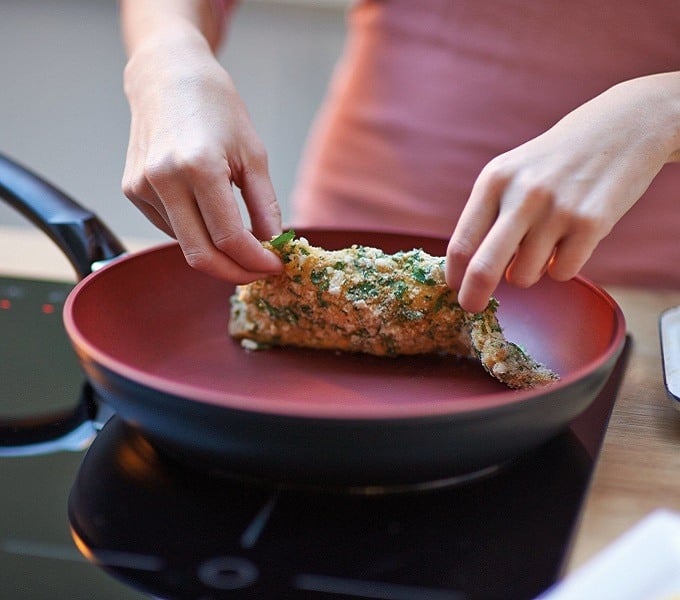
Ceramic frying pans are true leaders in frying safety. This mainly stems from the fact that frying pans with a ceramic coating are characterised by high resistance to extreme temperatures. Did you know that these types of vessels can be heated up to 400 degrees Celsius? What's more, they are completely friendly to our health and the environment. They do not release any toxic compounds during frying. Furthermore, the ceramic coating does not react with food ingredients and does not alter the taste or smell of dishes.

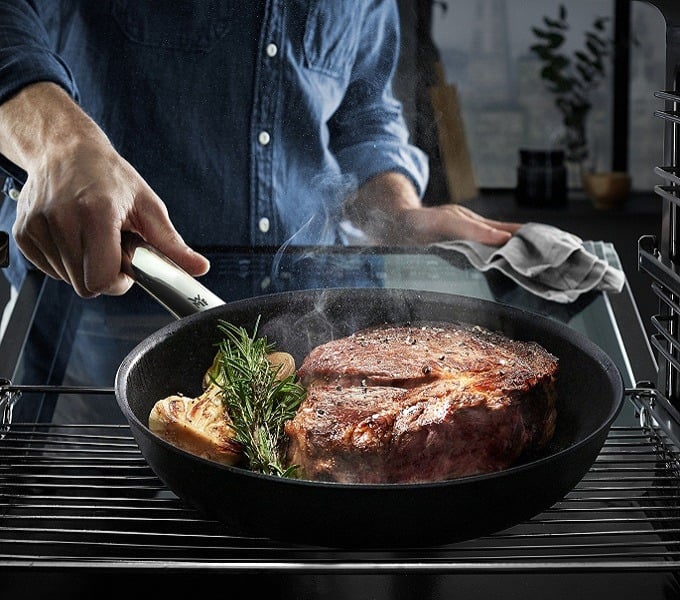
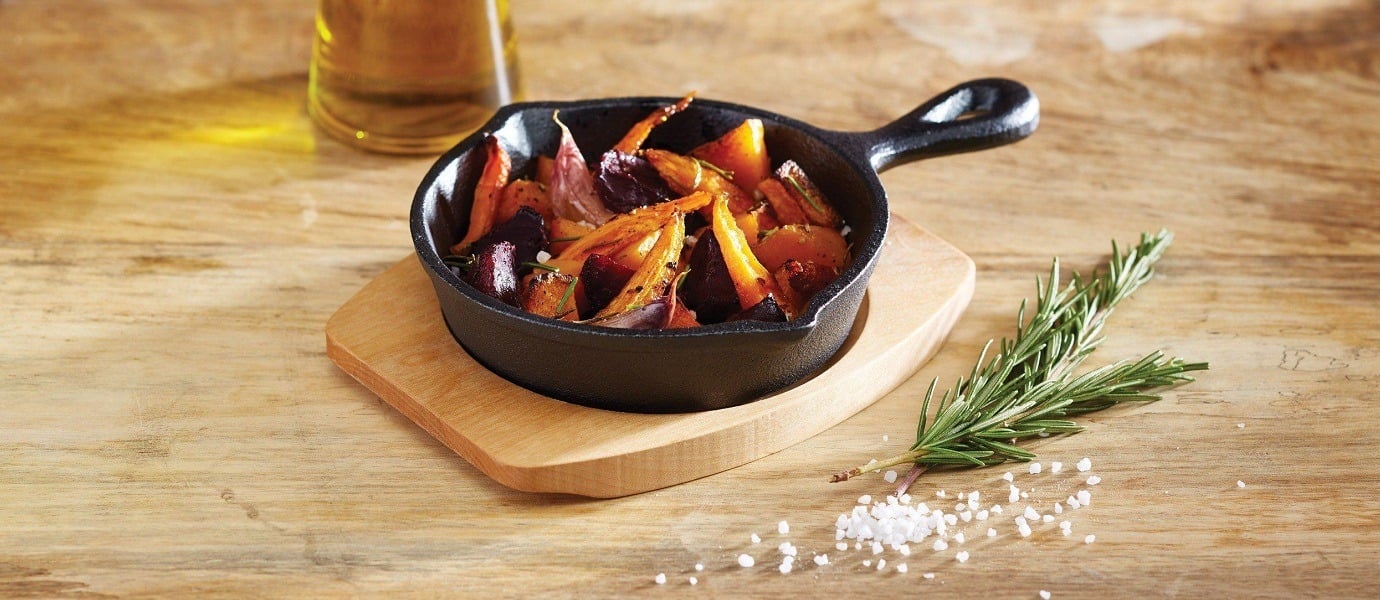
Excellent for frying in oil are cast iron frying pans, which are made exclusively from natural materials, and also feature resistance to scratches and high temperatures, making them ideal frying pans for the oven.
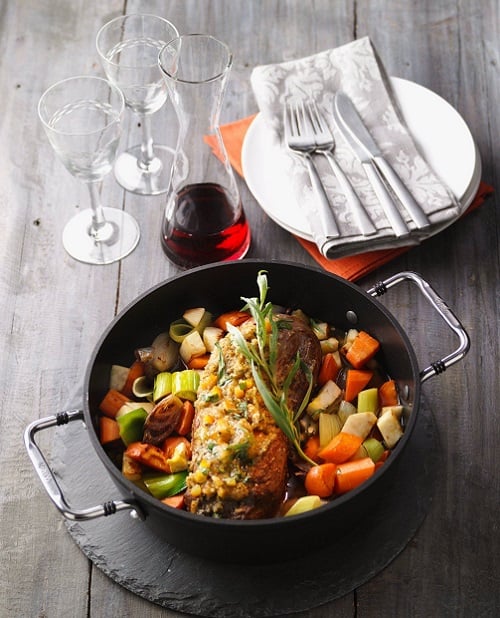
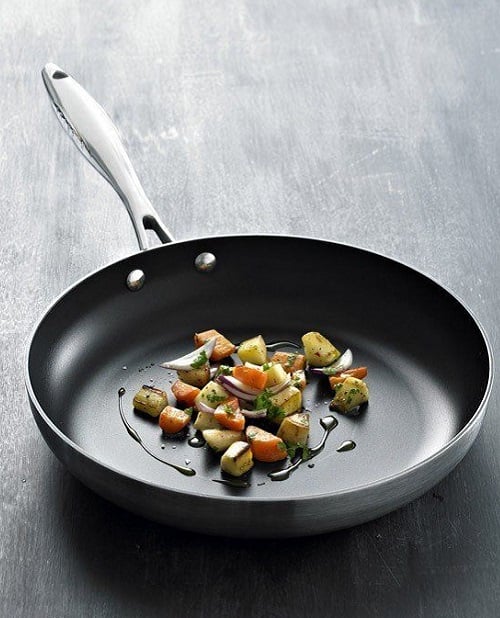
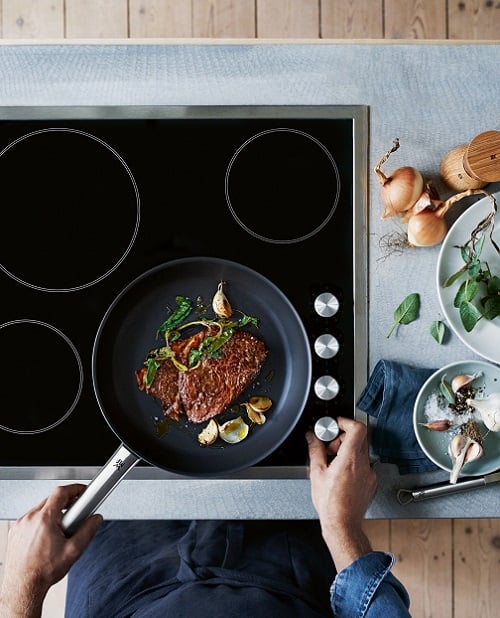


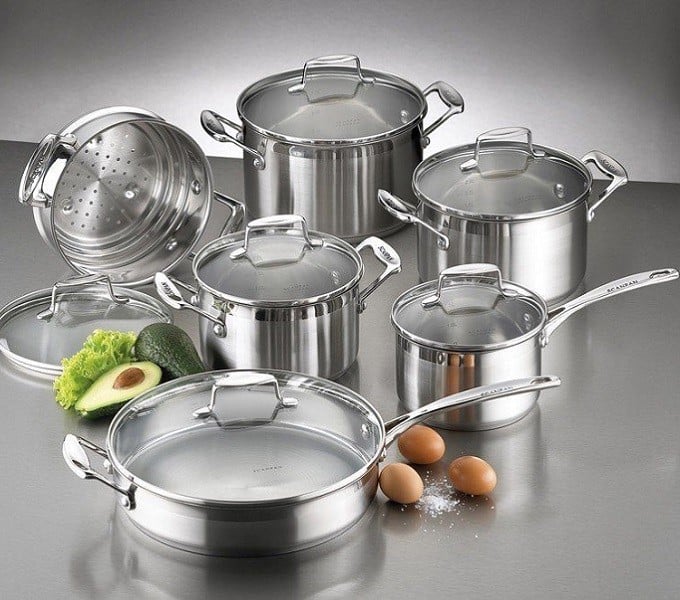
Which frying pan is best for frying with fat? A stainless steel frying pan is also a good choice, as, like its predecessors, it is safe for health, because no harmful materials cover it. Furthermore, it boasts high resistance to scratches, rusting, or mechanical damage.
No matter what type of oil and pan you choose, and what dish you'll be preparing, always remember to:
- fry food on well-heated fat;
- if possible, drain excess fat from the fried dish on a paper towel;
- never use the same fat for repeated frying, as this can lead to the formation of substances detrimental to our health.
The best frying pans for fat-free cooking
Essential for frying without the use of fat is a fat-free frying pan with a special non-stick coating that is safe for health, free from harmful compounds like PFOA or heavy metal compounds, to which food does not stick, even when fried at high temperatures. Several types of fat-free frying pans are available on the market, differing in their material. Discover the properties of various types of frying pans designed for fat-free cooking.
- Teflon frying pan – a popular oil-free frying pan
Teflon frying pans enjoy widespread popularity. They are relatively inexpensive and, thanks to their non-stick coating, allow for frying without the use of oil. Unfortunately, their advantages end there. Teflon frying pans are not very resistant to scratches, and a scratched coating loses its non-stick properties and can become toxic. Furthermore, Teflon frying pans are produced using compounds potentially harmful to our bodies, which, if the pan is used incorrectly, e.g., at high temperatures or if frying on a damaged pan, can leach into the fried food and subsequently into our bodies.

- Ceramic frying pan – a healthy frying pan for cooking
With their smooth, non-stick coating, ceramic frying pans are enjoying increasing popularity and interest among users. It's hardly surprising, as, compared to the well-known Teflon frying pans, they are much more resistant to scratches and are also adapted for frying at very high temperatures. Moreover, as we've already mentioned, ceramic-coated frying pans are healthy frying pans, releasing no harmful compounds during frying.
- Titanium-ceramic coated frying pan – the best frying pan for fat-free cooking
Frying pan manufacturers often combine the properties of ceramic with titanium, offering their customers frying pans with a titanium-ceramic coating. The combination of the advantages of these two materials in one product makes such frying pans durable, robust, resistant to high temperatures, scratches and damage, and safe for health. All these features and properties mean that a titanium-ceramic coated frying pan is the best frying pan for fat-free cooking.


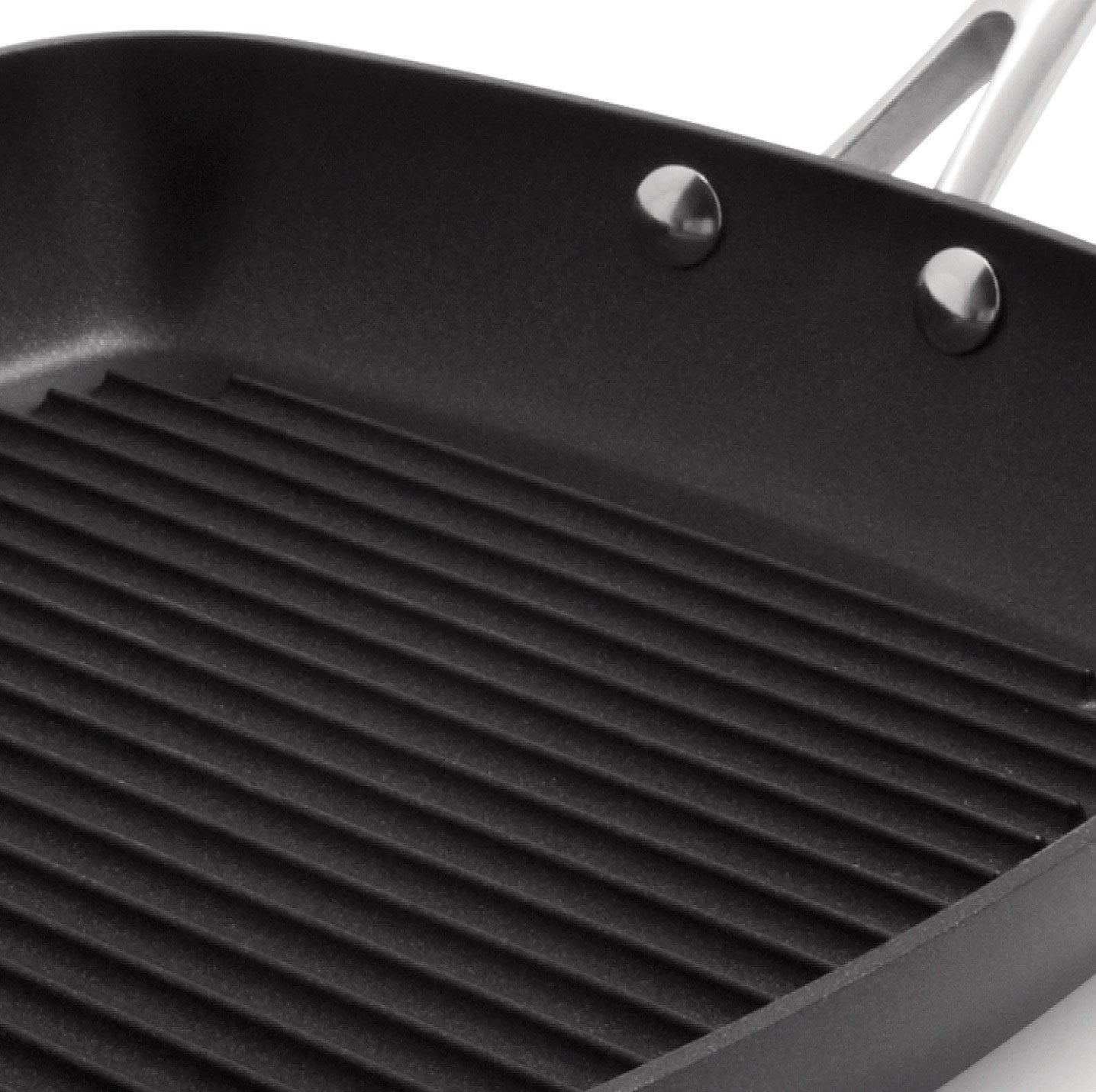
When presenting fat-free frying pans, it's also worth mentioning grill pans, on which you can prepare delicious, fat-free, and therefore light and low-calorie dishes. The secret of grill pans lies in their ridged bottom, which allows rendered fat to drip away freely instead of being absorbed into the dish, remaining in the pan's grooves. Such a surface also ensures that food does not stick to the pan and does not burn.

Pizza from a frying pan? Why not!
Frying in a pan can be healthy!
As you can see, frying, although often associated with greasy and high-calorie food, can be healthy, as well as equally delicious and aromatic. By keeping in mind a few simple rules for healthy frying, you don't have to give up your favourite dishes prepared this way.