Cast Iron Pans
Cast-iron pans are a long-lasting and long-lasting investment, and their use brings many advantages. It is precisely these pans that are often used by the world's best chefs, and when it comes to kitchen equipment, they can do no wrong.... It is true that a cast iron pan is not as light as an aluminium pan, but it has a number of advantages that minimise the weight problem.
Cast iron, a completely health-safe material, allows heat to be evenly distributed and stored for a long time, making cast iron pans ideal not only for frying but also for serving food straight to the table. These types of pans, thanks to their thickness and weight, are stable, do not deform and do not overheat (oven pans are usually cast iron). With proper maintenance, a cast iron pan will last for decades!
66 products


Trends, new products and ideas.


Cast Iron Pan - Choose a Pan for Life
The kitchen is the heart of the home, and in it, not only taste but also the quality of tools matters. If you're looking for reliable equipment that will serve you for years and take your culinary skills to the next level, then cast iron pans are the answer to your search.
Where does the phenomenon of cast iron pans come from? These are classic vessels, valued by professionals and home cooks worldwide, which offer extraordinary durability and excellent utility properties. Thanks to them, frying, stewing, baking, and even grilling become a real pleasure.
Dive with us into the world of cast iron cookware and discover pans with a luxurious look and... even more luxurious properties!
Advantages of Cast Iron Pans
- Cast iron pans are synonymous with durability and reliability. Their greatest advantage is excellent heat distribution, which means they heat up evenly and retain high temperatures for a long time. Thanks to this, whether you're frying a steak or stewing vegetables, you can count on perfect results. Unlike many other types of pans, cast iron pans heat up entirely, not just on the bottom, which is crucial for perfect browning and caramelization of dishes.
- Another advantage is their natural non-stick coating, which, over time, with regular use and proper maintenance, gets better and better. You don't have to worry about harmful chemicals that may be released from some Teflon coatings – uncoated cast iron pans are completely safe for health. What's more, when cooking in cast iron, small amounts of iron can leach into food, which is beneficial for health, especially for people with iron deficiency. These are truly high-quality pans.
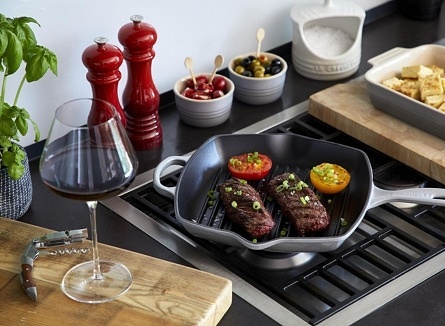
- These pans are extremely versatile. You can use them on gas, electric, ceramic, induction hobs, and even in the oven or on the grill. Their solid construction makes them highly durable pans that will last for generations if you take proper care of them. It's an investment for years to come that only gains value over time, becoming a true family heirloom.
Disadvantages of Cast Iron Pans
- Despite their many advantages, cast iron pans also have their specific characteristics, which some may consider disadvantages. First and foremost, they are heavy pans. Their solid construction, while guaranteeing stability and even heating, makes them heavy, which can be a challenge for some users, especially those with less strength.
- Another issue is their specific maintenance method. Uncoated cast iron pans require regular oiling and seasoning to maintain their non-stick properties. If you don't take proper care of them, they can rust. They also cannot be washed in a dishwasher or with strong detergents, which can be inconvenient for people accustomed to modern, hassle-free pans. However, over time, cast iron pan maintenance becomes intuitive and doesn't take much time.
- What's more, cast iron pans heat up slower than pans made of other materials, such as aluminum pans or stainless steel. They require patience and time to reach optimal temperature. However, once they heat up, they retain it for a long time, which is their advantage. These pans also require caution when using acidic foods, as they can react with the metal, changing the taste of the food and affecting the patina. Despite these minor inconveniences, the benefits of owning and using a cast iron pan definitely outweigh these drawbacks.
Cast iron pans have many advantages that make them valued by both amateurs and professional chefs. Cast iron pans heat up evenly and retain heat for a long time, allowing for perfect frying and stewing of dishes.
Although they require a bit more attention in maintenance than classic pans and are undoubtedly heavy pans, their durability and versatility are invaluable features. These are high-quality pans that, with proper care, can serve for generations.


Cast Iron Pans – How to Use Them? Practical Tips
Using cast iron pans (just like cast iron roasting pans) is an art that becomes second nature over time. Before first use, and also after each wash (if the pan is not factory seasoned), it should be properly prepared. The key is seasoning, which involves coating the pan with a thin layer of oil (e.g., rapeseed, flaxseed, coconut) and heating it to a high temperature. This process creates a natural non-stick coating and protects the pan from corrosion.
When cooking, remember not to use too high heat right away. Cast iron pans heat up gradually, and their excellent heat distribution means they don't need maximum burner power. It's best to start with medium heat and allow the pan to slowly reach the desired temperature. This will prevent burning and ensure even frying.
For stirring and flipping food in uncoated cast iron pans, use wooden, silicone, or metal spatulas. You don't have to worry about scratches, as is the case with Teflon-coated pans. Remember that these pans can perfectly fry everything from scrambled eggs to steaks, but the key is the right temperature and a little fat. Sometimes, a small amount of fat is enough to prevent food from sticking.
After cooking, wash the pan with warm water, without using dish soap (or with a minimal amount, only if absolutely necessary and you are sure it won't harm the patina). Then dry it thoroughly and rub it with a thin layer of oil to maintain the patina and prevent rusting. This simple ritual will ensure your high-quality pan serves you for years.
How to Maintain a Cast Iron Pan?
Maintaining a cast iron pan is the key to its longevity and preserving the non-stick properties of the cookware. As mentioned, regular seasoning is absolutely essential. This process involves baking a thin layer of oil onto the pan's surface, which creates a polymeric protective layer. The more often the pan is seasoned and used, the better its natural coating becomes.
Steps for proper maintenance:
- Washing: After each use, wash the pan with warm water, preferably without detergents. If food residue has stuck, use a stiff brush or a cast iron pan scraper. Avoid metal scrubbers, which can damage the patina.
- Drying: This is the most important step! Cast iron is prone to rusting, so cast iron cookware must be thoroughly dried. Our tip: after washing, immediately dry the pan thoroughly, preferably on the stove for a few minutes until all moisture evaporates.
- Oiling: When the pan is warm and dry, apply a thin layer of vegetable oil (e.g., rapeseed, flaxseed, sunflower) to the entire surface, both inside and out. Rub it in with a paper towel, removing any excess, so that the surface is slightly oily but not dripping.
- Storage: Store the pan in a dry place. If you have several pans, separate them with a paper towel to prevent scratches and corrosion. This rule also applies to wok pans.
Remember that cast iron cookware must be treated with care, and it will reward you with unparalleled cooking quality. Over time, you'll notice that non-stick pans get better and better, and their dark, shiny surface is true proof of your culinary dedication.
Cast Iron Pan for Induction?
Yes! This is one of the many advantages of cast iron pans. Thanks to their ferromagnetic properties, cast iron pans work perfectly with induction cooktops. Induction works on the principle of a magnetic field that generates heat directly in the bottom of the pan. Cast iron is an excellent heat conductor and reacts to the magnetic field, which makes it heat up quickly and evenly on induction.
You don't have to worry about special adapters or cookware – if you have an induction cooktop, a cast iron pan will be its perfect partner. This is further proof of the versatility and practicality of these remarkable pieces of cookware. No matter what kind of kitchen you have, high-quality cast iron pans will perform excellently, offering pans for various culinary uses.