Cookie Cutters
We love sweets in every form! That's why, as befits the Form Factory, we have cake moulds in the shape of unicorns, gingerbread houses, stars, cats, a bicycle, a pineapple and even a camera. We don't judge what form the sweet is for you, we just help you get it, so we have die-cutting mould s in all sorts of shapes :) If you are looking for Christmas designs, take a peek at our range of Christmas moulds and moulds. We don't forget about Easter either and have suitable Easter moulds.
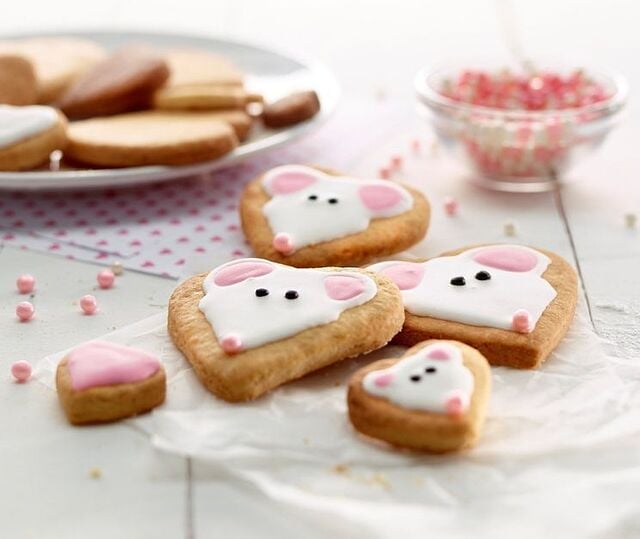
And once you have baked the cookies in the shape of your dreams, don't forget to decorate them! Special decorating templates and biscuit stamps will help you do this. For decorating your Easter gingerbread cookies, the icing tools come in handy, allowing you to model your decorations with extreme precision.
31 products


Trends, new products and ideas.




Cookie Cutters – The Key to Magical Bakes and Sweet Memories
Do you remember that feeling? The moment when the sweet, spicy aroma of gingerbread cookies wafts through your kitchen, and with a rolling pin in hand, you become the architect of small, edible works of art. It's this very scent, this atmosphere, and these cherished memories that make baking cookies more than just a culinary task. It's a ritual that connects generations and allows us to hit pause on time, if only for a moment.
Choosing the right cookie cutters is the first, and arguably most crucial, step on the path to creating perfect bakes. They are the ones that give shape to your sweet fantasies, determining whether classic stars, charming animals, or perhaps intricate, geometric designs will grace your plate. In this guide, as an expert in sweet decorations and kitchen accessories, I'll help you understand how to pick the perfect cutters to match your needs, your dough, and the occasion.
Remember, baking isn't just about taste; it's about presentation too. If you're looking for inspiration for other baked goods, be sure to check out our tart pans – perfect for crafting an elegant dessert.
Choosing the Right Cookie Cutters: Avoiding Stickiness and Achieving Perfect Shapes
This is one of the most frequently asked questions. The answer, as is often the case in the kitchen, isn't straightforward and depends on the type of dough you plan to prepare, as well as the desired outcome. Three main types of materials dominate the market for cookie cutters: metal, plastic, and silicone. Each boasts unique properties that influence the cutting and baking process.
Metal Cookie Cutters – Precision and Tradition
Metal cookie cutters are an absolute classic. Most often made from stainless steel or tin-plated steel, they are prized for their exceptional sharpness and durability.
Advantages of metal cookie cutters:
Precise Cutting: Their sharp edge allows for perfectly clean cuts, even with intricate shapes from shortcrust or gingerbread dough.
Durability: They are resistant to deformation and, with proper care, will serve you faithfully for years to come.
Versatility: They're not just for cookies; they're also excellent for cutting decorations from sugar paste, marzipan, and even for shaping mini-sandwiches or fried eggs (yes, that's a chef's trick!).
Disadvantages of metal cookie cutters:
Require Drying: After washing, they must be thoroughly dried to prevent corrosion (this is especially true for tin-plated steel).
Sharpness: Caution should be exercised, especially when baking with children.
If your goal is a perfectly smooth edge and you want your gingerbread cookies to look like they came straight from a professional's kitchen, then metal is the obvious choice.
Plastic Cookie Cutters – Safety and Variety
Plastic cutters are often chosen for baking with children. They are safe, colorful, and come in a countless array of designs.
Advantages of plastic cookie cutters:
Safety: The absence of sharp edges minimizes the risk of cuts.
Easy to Clean: They can be safely washed in the dishwasher.
Price and Availability: They are generally more affordable and readily available in themed sets.
Disadvantages of plastic cookie cutters:
Less Precision: The edge is thicker, which can make it harder to cut very thin or sticky dough.
Durability: They can crack or warp under high temperatures or strong pressure.
Plastic cookie cutters are ideal for more stable doughs and for fun in the kitchen with the youngest bakers.
Silicone Cookie Cutters – Flexibility and Modernity
While silicone is primarily associated with tart pans or cupcake molds, we're increasingly seeing it in the form of small, individual cookie molds, especially for those with more intricate, three-dimensional shapes.
Advantages of silicone cookie cutters:
Non-Stick: Dough won't cling to the sides, and removing your baked goods is incredibly easy.
Flexibility: They allow for the creation of shapes that would be impossible to achieve with metal.
Temperature Resistance: They can be used for both baking and freezing (e.g., chocolate pralines).
Disadvantages of silicone cookie cutters:
Lack of Sharpness: They are not suitable for cutting out shapes, only for molding and baking.
Require Support: Due to their flexibility, they should be placed on a rigid baking sheet before being filled with dough.
Silicone is the choice for those who want to bake cookies with a unique, three-dimensional look, without the need for intricate icing later on.
Mastering Cookie Cutters: Tips to Avoid Frustration
Even the best cookie cutter won't guarantee success if you don't follow a few basic rules. The secret lies in the dough.
Dough Preparation – The Key to Perfect Shapes
Chilling: Shortcrust, gingerbread, or butter dough must be well-chilled (at least 30 minutes in the refrigerator). Warm dough sticks to the rolling pin and cutters, and loses its shape after baking.
Flouring: Use a minimal amount of flour to dust your work surface. Too much flour will dry out the dough and make it tough. A better solution is to roll out the dough between two sheets of parchment paper or on a silicone mat.
Thickness: Aim to roll out the dough to an even thickness (usually 3-5 mm). Uneven thickness means uneven baking. For this purpose, a rolling pin with adjustable rings will be your best friend.
Cutting Technique – Small Details, Big Impact
Dipping in Flour: Before each use, dip the edge of the cookie cutter in flour. This minimizes sticking.
Single Motion: Cut out cookies with a single, decisive motion, without twisting the cutter. Twisting can distort the shape.
Close Proximity: Cut out cookies as close to each other as possible to minimize scraps for re-rolling. The fewer times you re-roll the dough, the more tender your baked goods will be.
Cookie Cutters and Occasions – Matching Shapes to Celebrations
Cookie cutters aren't just tools; they are the storytellers of your kitchen adventures. The right shape can instantly transport us to the heart of a particular occasion.
Christmas – Magic in the Shape of a Star
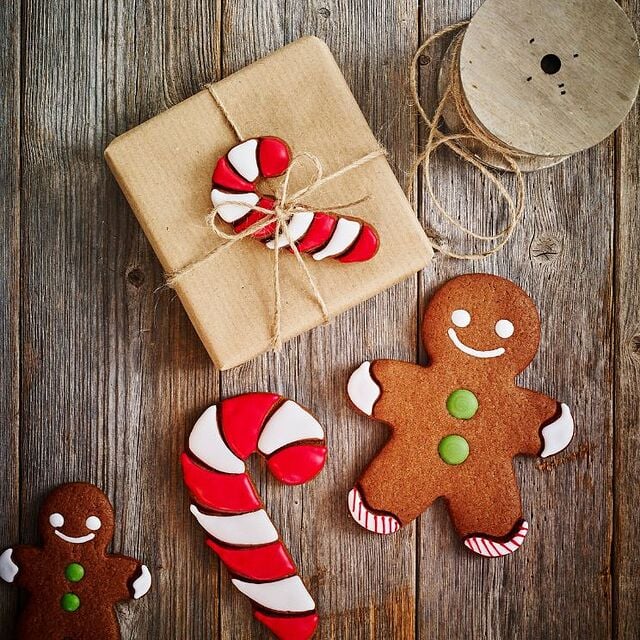
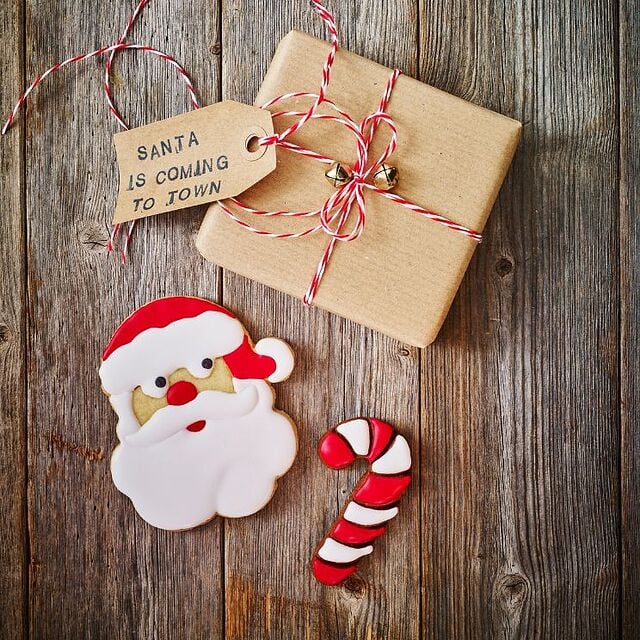
The holiday season is a golden age for cookie cutters. Christmas trees, stars, bells, reindeer, angels – these are absolute must-haves. During this time, embossed cookie cutters are also popular, instantly giving the cookie a texture perfect for a delicate dusting of powdered sugar.
Birthdays and Parties – Personalization and Fun
For birthdays, numbers, letters, and cartoon characters reign supreme. Personalized cookies with the birthday person's name are the hit of any party. It's worth having a set of alphabet and number cutters to create any message you desire.
Year-Round Inspiration – From Hearts to Animals
You don't have to wait for the holidays to use your cookie cutters! Charming hearts, flowers, butterflies, or animals are the perfect way to add a sweet touch to your coffee break on an ordinary day.
Don't forget the decoration! Cut-out cookies are just the beginning. The real magic happens when you reach for baking decoration accessories. Royal icing, sprinkles, edible pens – these are what transform a simple cookie into a miniature work of art.
Cookie Cutters – Good to Know (Expert Summary)
Choosing cookie cutters is an investment in the joy of baking and the quality of your creations. Here are the key takeaways to keep in mind when shopping:
Material Matters:
Stainless/Tin-plated Steel: Best for precise cutting of shortcrust and gingerbread doughs. Requires thorough drying.
Plastic: Ideal for children and simpler shapes. Easy to clean.
Silicone: Excellent for molding 3D cookies and doughs that tend to stick.
Cutting Technique: Always use well-chilled dough and cut with a single, decisive motion.
Dough Thickness: Maintain an even thickness (3-5 mm) – this is key to even baking.
Multifunctionality: Cookie cutters can be used for cutting vegetables, fruits, sandwiches, and even for shaping rice.
Hygiene: Always wash and thoroughly dry your cookie cutters after use to prevent corrosion and bacterial growth.
What Are the Latest Trends in the World of Cookie Cutters?
The world of confectionery, much like fashion, is constantly evolving. Cookie cutters are no longer just simple tools for cutting. Today, they are advanced gadgets that allow for the creation of true, edible works of art.
3D Cookie Cutters and Modular Sets
The biggest hit in recent years has been 3D cookie cutters. They allow you to create cookies that, once baked, can be assembled into three-dimensional structures – houses, animals, or even entire scenes. They require a bit more precision in cutting and assembly, but the final effect is spectacular.
Advantages of 3D cookie cutters:
"Wow" Factor: Cookies become the centerpiece of your table decorations.
Engaging Fun: Assembling the cookies is great entertainment for the whole family.
Perfect for Gifting: Ready-made 3D cookie sets make a unique, handmade present.
Plunger Cutters (Stamps)
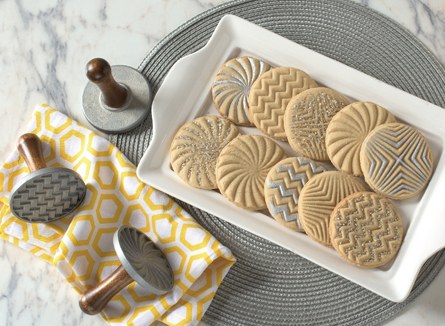
This is the solution for those who value speed and aesthetics. A plunger cutter not only cuts out the shape but also embosses a design onto the dough – such as lace, text, or a texture.
Why are they worth having?
Time-Saving: Cutting and decorating in one swift motion.
Perfect for Icing: The embossed design provides an excellent base for precise royal icing decoration.
Uniform Design: Guarantees that all your cookies will look identical.
Adjustable Cookie Cutters
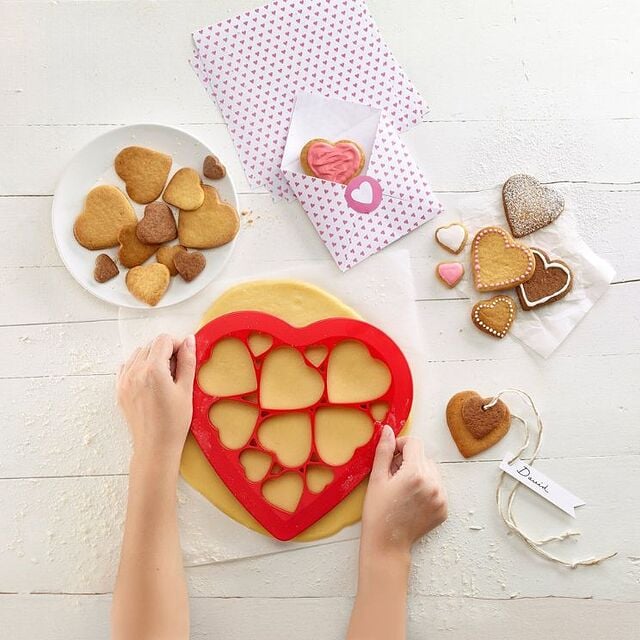
For those who appreciate flexibility, adjustable cookie cutters have emerged. Thanks to their sliding elements, you can create the same shape (e.g., a heart or a square) in several different sizes, which is ideal for creating layered compositions or for using up leftover dough.