Proper rug cleaning affects their longevity and aesthetic appeal. How to care for your rug? The most important things are consistency and choosing the right cleaning method for the type of rugs you own.
How to care for a rug?
The most important aspect of cleaning rugs is to vacuum them regularly and frequently. This way, you’ll prevent dust and dirt from accumulating deep within the rug, which, when ingrained in the pile, weighs down and wears out the fibres. Rugs should be vacuumed with a regular, sweeping motion, without pressing too hard, to avoid damaging the pile. It is recommended to vacuum them in different directions. This prevents the pile from lying flat in one direction and leads to more effective dirt removal. For vacuuming rugs made of synthetic fibres, it is recommended to use a turbo brush, i.e., a special rotating brush powered by suctioned air, which does an excellent job of removing hair or ingrained dust and sand from the rug. For vacuuming wool and cotton rugs, use a traditional nozzle without brushes, as the force of a turbo brush can lead to pulling out and damaging the pile.
Remember to beat your rug!
Beating your rugs also plays a vital role in their care. This task is worth doing 2-3 times a year. Occasional rug beating is an excellent way to remove residual dust, sand, or crumbs. It shouldn’t be too vigorous, as strong beating of the rug can damage the structure of its knots.
Get inspired!
What else should you remember when caring for rugs?
Both for round and oval rugs, and for rectangular rugs, you must remember to rotate them regularly! This will ensure that the rug's surface wears evenly and fades consistently due to sunlight, without unsightly, light, discoloured patches. This treatment will also help to avoid permanent indentations in the pile caused by the weight of furniture. However, if creases do appear on the rug, simply place a slightly damp towel over the area and iron out the crease in the direction of the pile with an iron set to medium heat.
Furthermore, rugs made of delicate fibres should be placed in less-frequented areas of the house, e.g., in the bedroom. Try also not to walk on the rug in shoes. This will protect it from both dirt and damage, such as tearing the pile.


Oh, and one more thing! If you have underfloor heating installed in your home, do not opt for a wool rug. Why? Wool is a natural thermal insulator, so a rug made of this material could negatively affect the efficiency of your underfloor heating. A better choice would be synthetic rugs, which allow heat to pass through well.
Vacuuming, beating, or rotating rugs is an extremely important part of keeping them clean, but nothing can truly replace washing a rug. The exact cleaning method depends on the material it's made from and the pile length. Find out how to clean specific types of rugs.
How to clean a rug made of natural materials?
Rugs made of natural materials, such as wool or cotton, require special handling. If a stain appears on their surface, it should be removed as quickly as possible, as just 15 minutes is enough for the stain to start bonding with the fibres and setting in. How to do it? First, blot the stain with a paper towel, and then try to remove it using a stain remover designed for wool rugs. It should be marked with the “Wool Safe” symbol. It's advisable to test the chosen product in an inconspicuous area before applying it, to check if its use will not lead to discolouration of the fibres or damage to their structure. The stain should be cleaned from the edges towards the centre. Try not to rub it, as this can contribute to enlarging the stain and distorting the pile. After applying the stain remover, rinse the cleaned area of the rug thoroughly with lukewarm water. This is important, as hot water can damage or felt the material, and also cause excessive shedding of the pile.

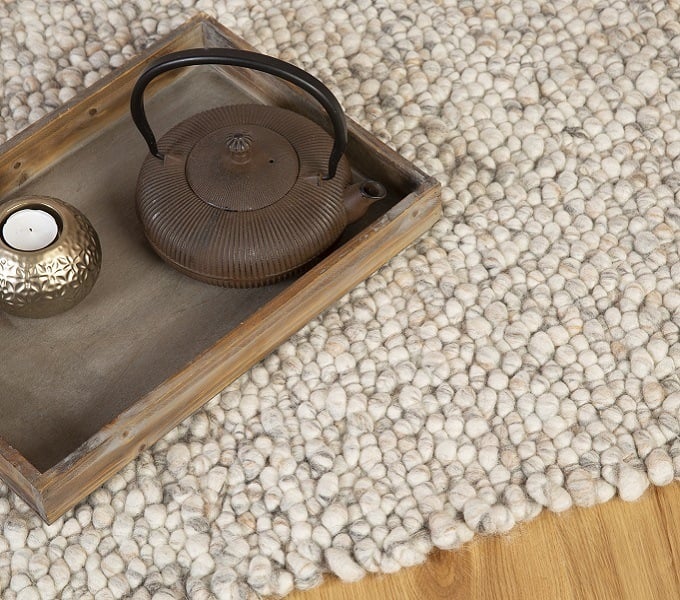


Wool rugs or cotton rugs, after a longer period of use, may need wet cleaning over their entire surface. The method of shampooing the surface with foam, protecting the rug from getting soaked, is permissible. This treatment can be carried out independently, but great care must be taken not to over-wet the rug, as wool is very difficult to dry. Therefore, a much safer solution is to entrust the washing of a wool rug to a professional company that has the appropriate cleaning agents, equipment, and knowledge.
Washing rugs made of synthetic fibres
Rugs made of artificial fibres, including polyester, polypropylene, acrylic, or viscose rugs, in addition to regular vacuuming and beating, also require thorough cleaning from time to time. Washing agents designed for synthetic rugs and a soft-bristled scrubbing brush come to the rescue, as they won't cause the rug's fibres to pill. First, you need to prepare a solution of the washing agent. When cleaning the rug with a brush, you should make alternating movements “with the pile” and “against the pile.” Avoid circular movements and do not rub dirt deeper into the rug; instead, lift it upwards. Carefully dose the amount of washing agent to avoid over-wetting the rug, which could cause distortion or even permanent damage.





Proper drying is also a crucial element. The cleaned rug should be dried only in a horizontal position, at room temperature. Rugs should not be hung on a balcony or a clothesline, nor should they be dried with a hairdryer – this can lead to deformation and fading of the colour. Until it is completely dry, try not to walk on the rug or place any objects on it.
After the entire cleaning process, the washed, dry rug must be vacuumed. This way, any impurities you couldn't gather with the brush will be sucked up by the vacuum cleaner.
Cleaning long-pile rugs
Modern shaggy rugs have long piles, which means they can hide truly vast amounts of dirt. Unfortunately, cleaning shaggy rugs and faux fur rugs is not the easiest task. Manufacturers of long-pile rugs usually advise against cleaning with a washing agent and water, as thick fibres can absorb a surprising amount of moisture. It is possible to clean shaggy rugs with powders or foams designed for carpets, but such “dry cleaning” usually doesn't yield satisfactory results. These types of products can't reach all the nooks and crannies of the rug. Moreover, after such cleaning, residues of the preparation remain in the rug, as traditional vacuum cleaners do not have sufficient suction power to remove them effectively.


All this means that the most effective and efficient way to clean shaggy rugs is to wash them with a carpet cleaning machine, as well as with hot steam. The latter method not only removes all dirt but also has disinfectant properties – high temperatures effectively destroy all bacteria, viruses, mites, and mould spores.
Tip
Cleaning outdoor rugs
Terrace rugs are constantly exposed to dust, sand, pollen, and other airborne contaminants, which is why it's so important to clean them frequently and regularly. During their use, i.e., in spring and summer, they should be vacuumed at least twice a week. Furthermore, a thorough cleaning of the rug is recommended once a month using water, a soft-bristled brush, and an appropriate cleaning product. Outdoor rugs can also be “dry cleaned” using a specially designed powder.



***
Regardless of whether your interior is adorned with a vintage rug made of natural materials or a modern rug made of synthetic fibre – every type of rug requires proper care and regular cleaning. Only then will it dazzle with its immaculate and stylish appearance for a long time to come.