Jewellery Boxes
Jewellery boxes will help you keep all your trinkets in perfect order. Here you'll find jewellery cases with compartments of various sizes, often multi-tiered, to accommodate your entire collection of rings, necklaces, and bracelets. Want to personalise your jewellery box? Nothing could be simpler! Reach for products from the Stackers brand and choose each layer of your box.
Do you like to take in the contents of your casket at a glance? Choose a glass jewellery box, and its contents will hold no secrets from you. Want to keep your favourite trinkets with you while travelling? Check out our range of travel jewellery cases.
32 products


Trends, new products and ideas.


Jewelry Boxes: Your Treasures Deserve a Special Place
Every necklace, ring, or bracelet is more than just an ornament. It's a whisper of memories, a spark of joy, a memento of moments that have shaped your story. They bear witness to significant events, are silent keepers of family traditions, and small works of art that add sparkle to your everyday life and highlight the uniqueness of special occasions. That's precisely why they deserve an exceptional jewelry box, one that will shield these precious items from dust, scratches, and getting lost. In this guide, you'll discover how to choose the perfect jewelry box, how to organize it, and how to care for your treasures. These tips are for everyone, whether you have an extensive jewelry collection or are just starting your journey into the world of adornments.
Choosing a jewelry box should be a delightful experience, tailored to your individual needs to ensure both practical and aesthetic storage for your beloved pieces. Jewelry boxes come in a myriad of shapes and colors, making it easy to find one that perfectly complements your personal style and interior decor.
A jewelry box is a dedicated container designed for storing and organizing your precious baubles. Jewelry boxes are broadly categorized into classic (home) and travel models, differing in material, functionality, and intended use.
Small or Large Jewelry Box: Which One to Choose?
Picking the ideal jewelry box can feel like quite the quest. It's worth taking a moment to consider what you want to keep close at hand and what kind of product you need for your daily jewelry routine. Do you boast a grand collection that calls for a multitude of compartments and tiers? In that case, a large jewelry box or an elegant casket might be just the ticket, ready to house all your treasures – from delicate chains to statement bracelets – ensuring everything stays neat and looking fabulous on your dresser. Large jewelry boxes are often multi-tiered, featuring necklace hooks, drawers, and are designed for stationary storage. If you're a minimalist at heart and seeking a compact solution, a small jewelry box will be your perfect travel companion and ideal for everyday use – it's lightweight, lockable, secure, and often comes with a very attractive price tag.
When making your choice, keep these key aspects in mind:
- Capacity and organization: Think about how much jewelry you own and what types of pieces they are. With well-thought-out compartments, it's a breeze to keep things tidy and quickly find what you're looking for. Large caskets often feature dedicated spots for rings, hooks for chains, and compartments for earrings, preventing them from getting scratched. Open jewelry boxes, typically made of metal or wood, are great for daily use, offering quick access to frequently worn necklaces and bracelets, though they don't protect against dust. A well-organized jewelry box will help you avoid tangled chains and easily locate any piece you desire.
- Material: The material impacts both the aesthetics and durability of the product. Jewelry boxes are crafted from various materials – from classic wood and elegant eco-leather to modern plastics or glass. Models lined with soft material, often velvet, protect jewelry from tarnishing and scratches, while an aesthetically pleasing interior lining adds a touch of elegance to the entire product. A wooden jewelry box will add warmth and a classic feel, a leather one exudes luxury, and a glass one will beautifully display your ornaments. Modern jewelry boxes often incorporate glass materials and metal finishes, making it easier to showcase their contents. Some boxes can be richly adorned with intricately carved oriental metal elements and floral patterns.
- Style: Jewelry boxes are available in a spectrum of colors and shapes, such as heart-shaped, allowing you to match them to your personal taste and interior decor. Choose a product that will harmonize beautifully with your dressing table, chest of drawers, or any other spot where you plan to place it.
- Functionality: Lockable jewelry boxes and caskets provide security for your valuable items. Some boast additional features like a mirror, a lockable compartment for more precious trinkets, or even built-in music boxes. Consider whether these extras are important to you.
- Portability: If you're a frequent traveler, a small jewelry box is an absolute must-have – travel jewelry cases and boxes are compact, lightweight, and feature secure closures, making them perfect for transporting a curated selection of your jewelry.
Remember, a jewelry box is a product that can be a long-term investment. High-quality craftsmanship builds trust in the product. By choosing carefully, you'll gain not only a practical jewelry organizer but also a beautiful item that will delight your eyes every day, and its attractive price will make it accessible to a wide audience.


How to Arrange Jewelry in a Jewelry Box?
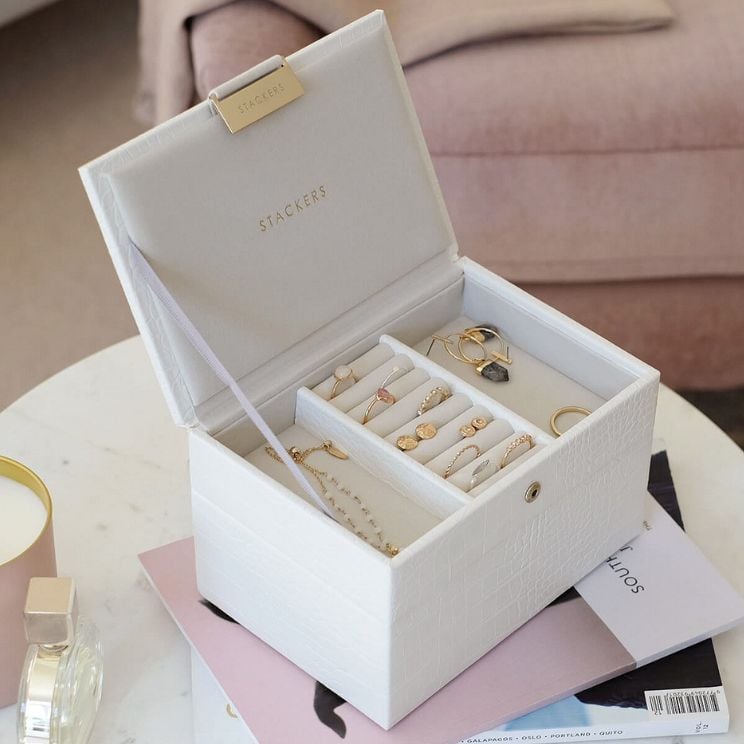
Properly arranging your jewelry in a jewelry box is the key to maintaining order and protecting your treasures from damage. Thanks to thoughtful compartments, it's easy to keep things tidy and quickly find the jewelry you're looking for, significantly enhancing user comfort. It's worth taking a moment to consider how best to organize the space within.
How to Store Necklaces to Prevent Tangling
Tangled necklaces are the bane of many jewelry lovers. Fortunately, there are several clever ways to prevent this, by utilizing the potential of your jewelry box or by employing alternative storage methods.
- Hangers and hooks: If your jewelry box features special hangers or hooks on the inside of the lid or within a compartment, this is an ideal solution for necklaces. By hanging each necklace separately, you minimize the risk of them getting tangled. Make sure the chains hang freely and aren't squashed.
- Foam rollers: Some jewelry boxes are equipped with foam rollers around which you can wrap necklaces. This is a great way to store longer chains that might otherwise get tangled when lying flat.
- Small pouches or envelopes: You can store each necklace in a separate, soft fabric pouch or paper envelope. Before placing it inside, fasten the chain, then gently roll it up and put it into the pouch.
- Compartmented boxes: When choosing a jewelry organizer with elongated compartments, you can lay individual necklaces within them. Ensure the compartments are long enough so that the chains aren't bent.
- Cork boards or wall hangers: If you have many long necklaces, you might consider hanging them on a decorative cork board or a special wall hanger. This not only prevents tangling but also serves as an interesting decoration.
How to Store Rings
Rings, though small, also require proper storage to prevent scratches and getting lost. Most jewelry boxes offer special solutions for their safekeeping.
- Grooved rollers: This is the most popular solution. Rings are slipped into grooves on a soft roller, keeping them stable and preventing them from touching each other. If you have many rings, choose a jewelry box with several rollers or a long roller with multiple grooves.
- Individual compartments: Some jewelry boxes feature small, square or rectangular compartments where individual rings can be placed. This is a good solution for larger, ornate rings that require more space.
- Foam inserts with holes: Special foam inserts with cut-out holes allow for stable placement of rings. These are often used in professional displays but work wonderfully in a home jewelry box too.
- Small boxes: If you keep your rings in decorative boxes, you can place them in a larger jewelry box without removing them. This provides additional protection.
How to Store Earrings
Earrings, due to their diverse shapes and fastenings, can pose a bit more of a challenge when it comes to storage. Check out our most beautiful earring boxes.
- Panels with holes: This is an ideal solution for stud earrings. Simply push the stud through the hole and secure it with the back. This keeps earrings organized and prevents them from getting lost.
- Hooks: Dangling earrings with hook clasps can be hung on special hooks. Make sure the hooks are long enough for the earrings to hang freely.
- Slotted strips: Some jewelry boxes feature strips with slots into which you can insert the fastenings of dangling earrings. This is a good way to store long, ornate earrings.
- Soft-bottomed compartments: Smaller earrings, such as hoops or small dangling models, can be stored in small compartments with soft lining. This prevents them from scratching or knocking against each other.
- Miniature boxes or pouches: If you have particularly delicate or valuable earrings, you can store them in separate, small boxes or soft pouches, and then place them in a larger jewelry box.
How to Store Jewelry?
Proper jewelry storage isn't just about aesthetics and organization; it's primarily about extending its lifespan and preserving its sparkle. A well-chosen jewelry box also protects valuable items from damage and loss of value. Regardless of whether you own modern jewelry boxes or simple cases, there are a few universal rules worth following.
- Protect from moisture: Moisture is one of jewelry's biggest enemies, especially for silver and other metals that can tarnish and corrode under its influence. Avoid storing jewelry in the bathroom or other humid places. If your elegant jewelry box isn't completely airtight, consider placing desiccant sachets inside.
- Protect from light and air: Prolonged exposure to sunlight can cause some precious and semi-precious stones to fade. Air can also contribute to metal oxidation. Store jewelry in a closed jewelry box or another airtight container, away from direct sunlight. The material of the box affects its aesthetics and durability, and models lined with soft material effectively protect valuable items from the tarnishing of precious metals.
- Separate individual items: To avoid scratches and damage, store each piece of jewelry separately. Utilize the compartments and dividers in your jewelry box. If you don't have enough dividers, you can wrap delicate chains in soft fabric or place rings in small pouches.
- Avoid contact with chemicals: Remove jewelry before bathing, swimming, cleaning the house, or exercising. Contact with detergents, chlorine, perfumes, and other chemicals can negatively affect the appearance and durability of your jewelry.
- Clean jewelry regularly: Gentle cleaning of jewelry with special products or a soft cloth will help remove dust, sweat, and other impurities that can dull its sparkle.
Note: Open jewelry boxes, usually metal or wooden, are designed for daily use to quickly put away worn necklaces and bracelets, offering quick access but no protection from dust.