There are a lot of myths, misconceptions and half-truths surrounding the different types of fats. They are attributed, often wrongly, to heart disease, atherosclerosis or overweight. Many people even choose to eliminate the fat from their diet. Meanwhile, many nutritionists believe that they are an essential component of the diet and that carbohydrates are more harmful than fat. Today, we are looking at butter and oil, which are present in almost every household - are they our enemy or ally? Let's find out!
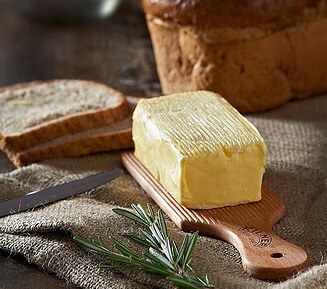
A roll of butter
Butter, a zoonotic product
Butter is a natural product that is made from the cream of cow's milk. We are of course talking about real butter, which contains around 82% fat. It therefore contains natural animal protein, which makes it easy to burn when frying in butter. Hence, clarified butter, i.e. without protein, is recommended for processing products in the pan at high temperatures.
What is real butter?
Valuable butter ingredients
Butter contains a lot of vitamin A, to which we owe, among other things, good eyesight. It also influences growth processes, which is why it is an essential ingredient in the diet of the youngest.
Butter also provides us with vitamin D, which we all know is responsible for healthy teeth and strong bones. And thanks to its vitamin E content, butter helps delay the ageing processes in our bodies.
A unique taste!
In addition to all these ingredients, butter also has an exquisite taste. Added to pastry, it makes it crisp and tasty, while scrambled eggs in butter are... well, it's simply heaven! Butter is also an indispensable ingredient in delicious Hollandaise sauce and homemade sandwiches. A crunchy Kaiser roll with a little fresh butter - who among us would say no to that?
The effects of butter on our health
So, does a buttery cube hide any disadvantages at all? Unfortunately, yes. Due to its high saturated fat content, butter is high in calories and rich in cholesterol. However, like other fats of animal origin: cheese, lard, milk, butter is a valuable source of energy for the body. In addition, these fats protect the internal organs from damage. In contrast, recent research results show that saturated fatty acids do not contribute to the risk of heart attack and stroke, as is commonly believed.
Butter only 'raw'



The oil of justice?
Oil as old as (almost) the world
Olive oil was pressed from the olive tree many centuries ago - oil was produced by the ancient Greeks, followed by the Romans and medieval monks in European monasteries.... Interestingly, the olive tree lives up to 2,000 years, so the oil consumed today is the same oil that was extracted many years ago! Another interesting fact is that the olive tree flowers all year round and bears fruit until the end of its life.
Olive harvest
Oil full of health
This Mediterranean delicacy has also found a place of honour in Polish cuisine. Is it right? Olive oil is rich in vitamins A, D, E and K. It therefore has a beneficial effect on the condition of our skin, bones and teeth. It also has an anti-inflammatory effect and often proves helpful in the fight against allergies. It is an excellent addition to salads, sauces and marinades. It is also suitable for frying, although it is better to use a lower-quality oil in order not to waste nutrients.
And what type of oil to choose? It's not that simple!
Buy extra virgin - it's the healthiest!
So are there any downsides? Like all fats, it is harmful in excess. We also have to be very careful when choosing it - the most health and taste benefits are to be found in unfiltered extra virgin oil.
| Type of oil | Characteristics |
|---|---|
| EXTRA VIRGIN OIL | This is a top quality product - obtained from cold virgin pressing, it is an all-natural fat without any additives, it is greenish in colour and thick. It can also be used as a salad dressing, but preferably raw. The acidity level of extra virgin olive oil is no more than 0.08 per cent. |
| VIRGIN OLIVE OIL | Virgin olive oil is also a virgin product, but its acidity level is more than 0.08 per cent, but less than 2 per cent. It works well for frying, cooking and as an addition to salads. |
| LAMPANTE OIL | This type of olive oil undergoes refining, i.e. heating. Heating the oil makes it lose its flavour, aroma, polyphenols and vitamins, so it is then mixed in the right proportions with virgin or extra virgin oil. |
| OLIVE-POMACE OIL | This type includes sansa oil (Italian name) and pomace oil (English name). These are the lowest quality products, obtained from the residues of the pressing process. Chemical solvents are added to them, leaving little of the oil itself in the product. The olive pomace oil undergoes refining, which makes it fit for consumption. |

How do you store butter vs. oil?
Butter
Contrary to popular belief, the fridge is not the only place where we can store it. It is safe to keep it at room temperature - it contains only a few per cent water, so it is not an environment that would be conducive to bacterial growth. However, let's make sure it is in a clean container with a cover. The best solution is the well-known butter box, which will not only be a functional piece of equipment but also a decoration for the kitchen. So let's consider which one is best.


Olive oil
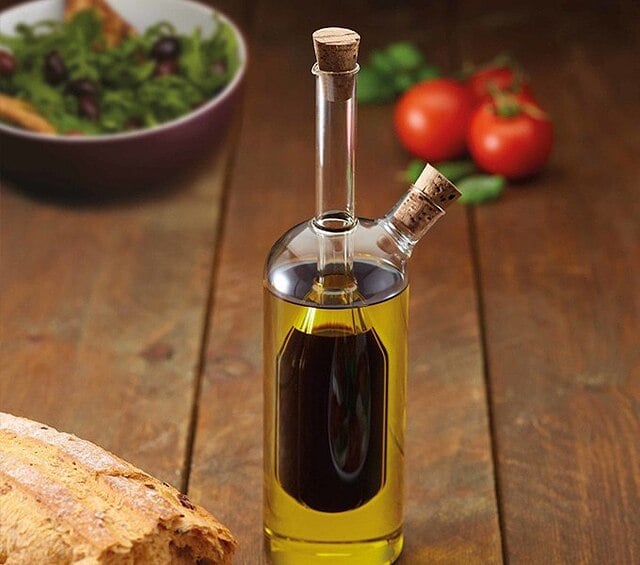
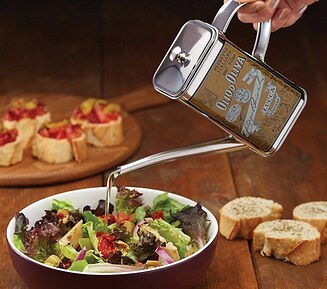
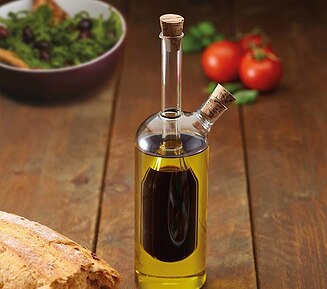
Olive oil should be stored away from light and in a cool place. Avoid the fridge, however, as too low a temperature can cause it to solidify. You can either keep it in its original packaging or pour it into a special dispenser. We strongly recommend the latter option - the dispenser is handy and will also be a great decoration for a beautifully set table. Its appearance should match the décor of your kitchen or dining room. You can choose from ceramic, glass or steel dispensers. Put your favourite herbs and spices in them and the oil will get a unique aroma. A great solution is the original 2-in-1 oil and vinegar dispensers. With them, you can season your favourite salad in one go.


£33.51
Champagne Oil or Vinegar Dispenser 160 ml, smoky grey
Crushgrind
Dispatch within 10 working days
Pros and cons - oil or butter?
Advantages and disadvantages of butter
Advantages:
- Contains the beneficial vitamins A, D and E,
- Gives energy and protects the internal organs,
- Tastes delicious and is an addition to many dishes!
Disadvantages:
- Contains a lot of saturated fat and raises cholesterol,
- Cannot be fried on it - unless it is clarified,
- It goes rancid, so it must be stored properly.
Advantages and disadvantages of oil
Advantages:
- Contains the beneficial vitamins A, D, E and K,
- Anti-inflammatory and good for the skin,
- Tastes delicious with a baguette as well as in a salad,
- Can be combined with balsamic vinegar to create sauces.
Disadvantages:
- There are several types of oils, so choose the type that fits your needs.
Quality counts!