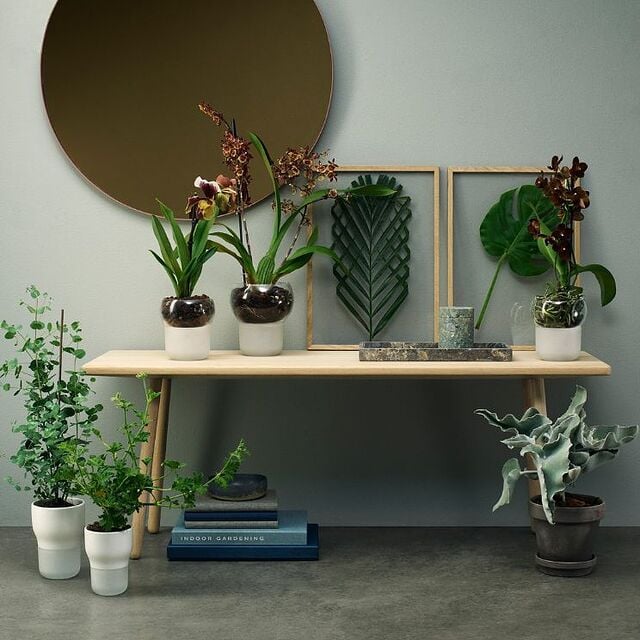
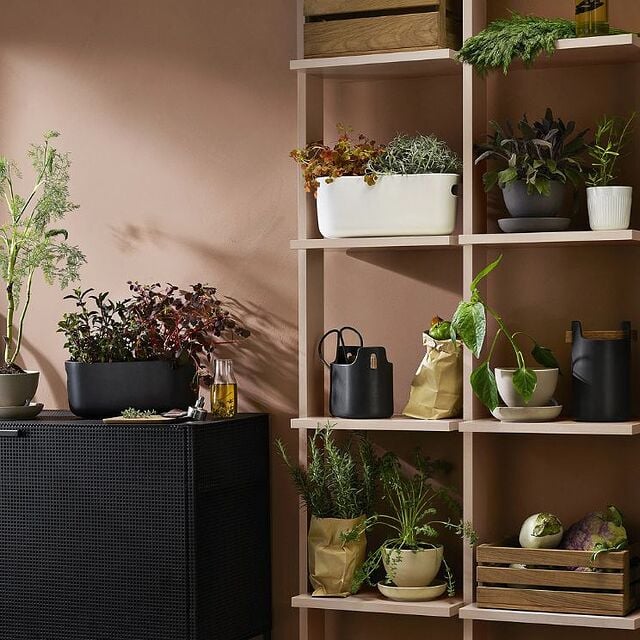
What is a self-watering pot? It's a game-changing solution that allows plants to draw exactly as much water as they need – without daily watering or the risk of overwatering. In this article, we explain exactly how the mechanism works, which plants benefit the most, and what to look out for when choosing the perfect model. If you want healthier plants and a lighter chore list, this solution could make caring for your home greenery a breeze.
What is a self-watering pot and how does it work?
Picture this: you head off on a two-week holiday in the middle of July, and when you return, instead of dry twigs, you are greeted by a lush, green monstera. Sounds like science fiction? Not if you have a self-watering pot. In this article, we will take a close look at this innovative solution that makes life significantly easier for every plant lover – from busy singles to families with kids and pets.
What is a self-watering pot? (A quick explanation to start)
A self-watering pot is a special plant container with a built-in water reservoir and a system that automatically delivers moisture directly to the plant's roots. In practice, this means the plant "drinks by itself" – drawing water whenever it needs it, while you only top up the reservoir every few days or weeks.
This solution is designed with the following in mind:
- busy people who don't have time for daily watering,
- forgetful minds who regularly lose plants to dehydration,
- frequent travellers – whether for business or pleasure,
- beginner gardening enthusiasts who are just learning the ropes of plant care,
- anyone who wants a green home without the stress.
A real-life example? You go away for 10 days in July, come back, and instead of a wilted fern or monstera, you see a plant in full bloom. That is the magic of self-watering pots – constant access to water without your daily intervention.




How is a self-watering pot built? Step by step
Regardless of the brand – whether it's trusted models from Danish brands like Squarely or Eva Solo, or budget-friendly balcony planters from DIY stores – most self-watering pots consist of similar components. These systems have been evolving since the early 2000s, but the basic design remains unchanged.
Key elements of a self-watering pot include:
- Upper section with soil and plant – a classic pot or removable insert where the plant grows in its appropriate substrate.
- Lower water reservoir – a special tank holding from 1 to 5 litres of water in typical indoor pots (larger column models can store up to a 12-week supply).
- Separator or mesh bottom – a barrier separating the roots from standing water, preventing root rot.
- Water transport system – a drainage layer (e.g., expanded clay, gravel) or a cotton wick that draws up moisture.
- Water level indicator – a float or transparent window that lets you know when it's time to top up the reservoir.
The entire design has one job: to prevent root rot while providing plants with optimal conditions by maintaining constant soil moisture.
When it comes to materials, self-watering pots are most often made of high-quality plastic – frequently frost-resistant plastic designed for balcony or terrace use. Ceramic models are also available for those who appreciate a more elegant look that blends seamlessly into any interior.
How does a self-watering pot work?
The principle is simple: water stored in the lower part of the pot is gradually drawn up by the plant via capillary action – exactly when the top layer of soil begins to dry out.
The step-by-step process looks like this:
- you pour water into the inlet or reservoir (e.g., once every 7–14 days for typical houseplants),
- the water goes into the lower reservoir beneath the pot,
- the substrate or wick draws water up into the root zone thanks to capillary force,
- the plant takes exactly as much water as it currently needs,
- the excess remains in the reservoir, waiting for the next "order" from the roots.
This phenomenon works just like a towel dipped in a bowl of water – the material naturally "pulls" moisture upwards. The substrate in a self-watering pot behaves in exactly the same way.
Thanks to this mechanism, it is harder to overwater (as excess water stays in the reservoir) or underwater (as there is always a backup supply of moisture). Of course, in cases of extreme neglect, even a self-watering pot won't save a plant. But here, we are talking about regular, not daily, watering. For example – you water the plant on Saturday, filling the reservoir to the marked level, and for the next week or two, you don't have to worry about your plants, because they not only have constant access to water but also grow stress-free.
Traditional self-watering system (insert + drainage)
This is the classic system known from popular balcony planters. It is the most common variant in larger pots designed for growing substantial plants.
The design of a traditional system consists of several parts:
- an outer pot with a hidden water reservoir
- an inner insert with a mesh bottom or legs that create space for water
- a drainage layer (expanded clay, gravel, perlite) at the bottom of the insert – 2–4 cm
- a water level indicator in the form of a float showing minimum and maximum levels
How to use this system in practice:
- for the first 1–2 weeks after repotting, water classically from above so that the roots reach the moisture zone and grow
- later, you top up the water exclusively into the reservoir through the dedicated opening next to the indicator
- make sure not to exceed the "max" mark on the level indicator
This traditional system works wonders in large pots for ficuses, monsteras, or dracaenas. It works equally well in balcony boxes with geraniums, petunias, or begonias – plants that require constantly moist soil on hot days.
Wick self-watering system (strings + transparent insert)
The wick system is a simpler and often more affordable version of automatic watering, particularly popular for kitchen herbs and smaller plants. It is the perfect solution for those who want to start their adventure with self-watering pots without a big investment.
The design of the wick system includes:
- an outer pot, often decorative, matching your kitchen decor
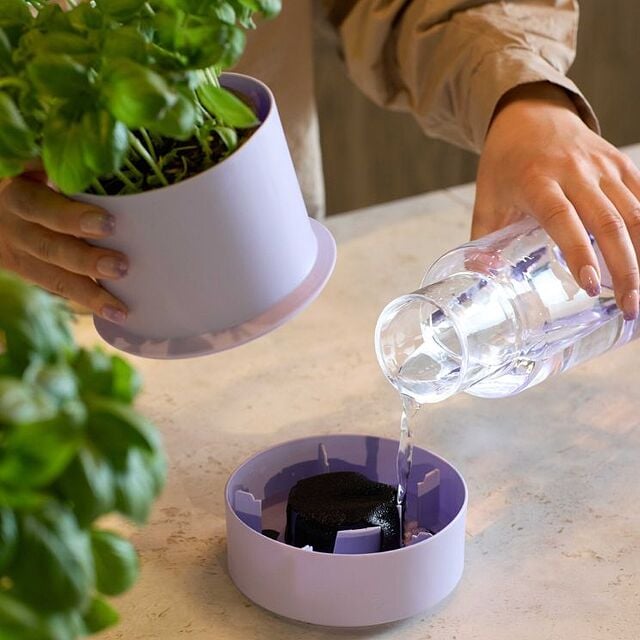
- an inner insert with holes in the bottom (sometimes transparent, so you can see the roots and soil condition)
- cotton or polyester wicks passing through the holes in the bottom of the insert
- the lower part of the outer pot acting as the water reservoir
How it works:
- one end of the wick is submerged in the water reservoir
- the other part of the wick is in the soil directly beneath the roots
- as the soil dries out, it "pulls" water up the string until it is sufficiently moist again
- the process repeats automatically as long as there is water in the reservoir
Imagine buying basil in a pot from the supermarket. Instead of watering it daily (and watching it wilt after two days of forgetfulness), you place it in a wick insert. From then on, you top up the reservoir every few days, and your herbs grow lushly for weeks.


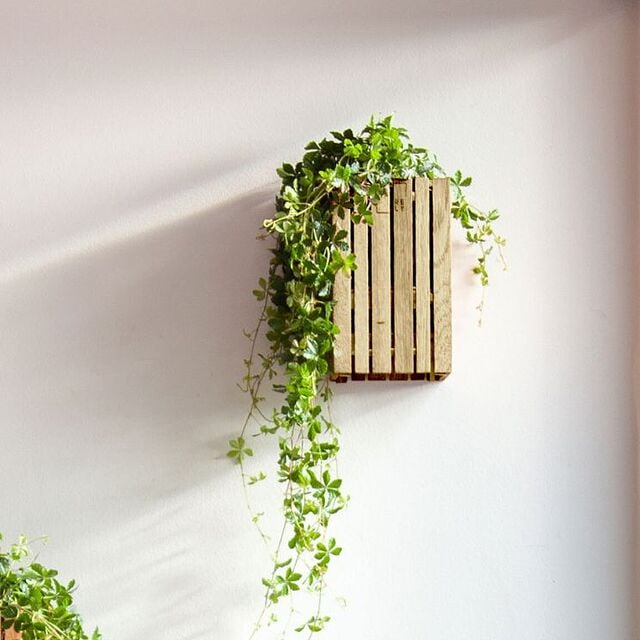
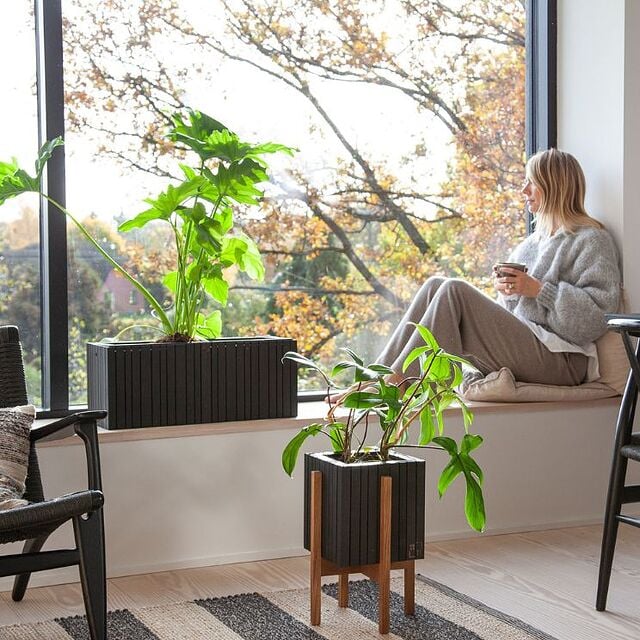


Eva Solo and Squarely self-watering pots – classic and modern in one
In the self-watering pot market, models from Eva Solo and Squarely stand out by beautifully blending functionality with aesthetics.
Eva Solo pots are design classics, characterised by a simple, elegant form and high-quality craftsmanship. Their watering system is intuitive and effective, making them perfect for both home use and office desks. The built-in water reservoir gives plants constant access to moisture, making plant care a breeze.
On the other hand, Squarely pots offer a modern solution for those who appreciate minimalist style and practicality. Made from sustainable materials, they feature a capillary system that precisely regulates water delivery to the plant roots. Squarely offers various pot sizes, allowing you to match them to the needs of different plant species.
Both brands are excellent choices for anyone looking for reliable, beautiful self-watering pots that provide plants with the perfect conditions to thrive.
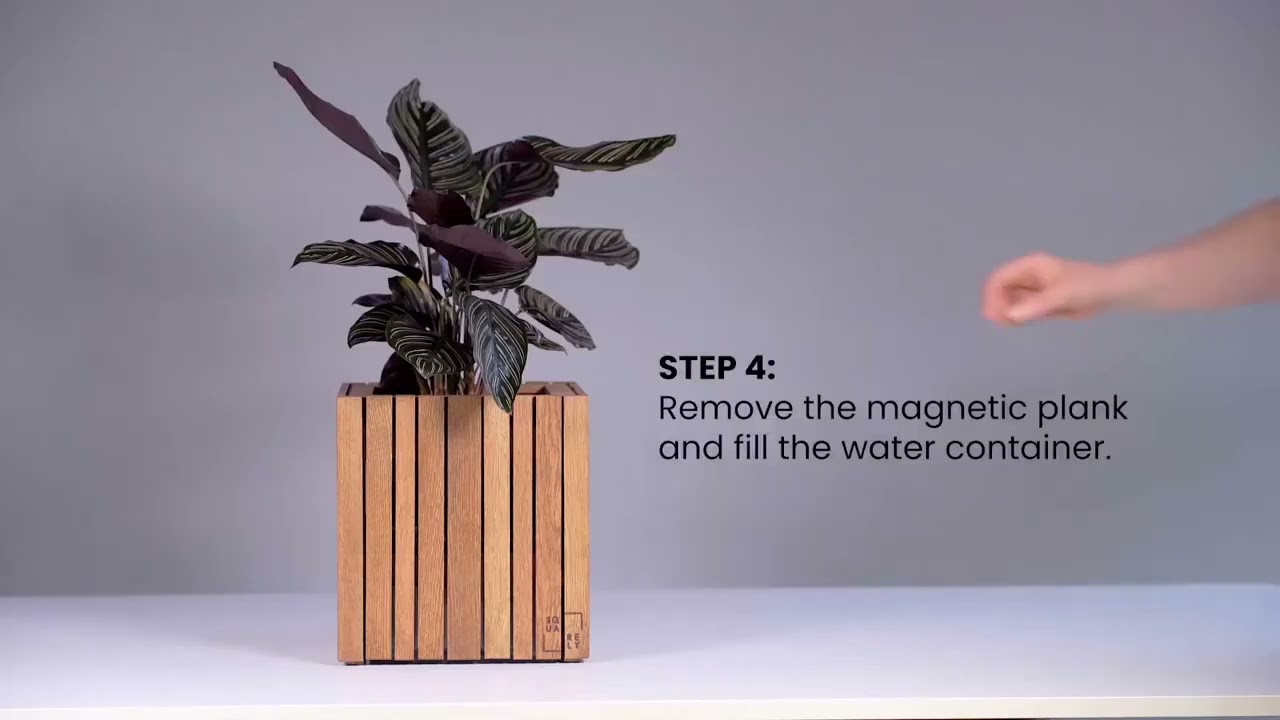
Why should you get a self-watering pot? The concrete benefits
A self-watering pot is a product designed to help beginners get their green fingers. If you are worried about killing yet another plant – this is the solution for you.
The main advantages of self-watering pots:
- Time-saving – for indoor plants, topping up the water once every 7–21 days is often enough, depending on the plant type and season
- Lower risk of underwatering – the plant has a backup water supply for when you forget, go away for a long weekend, or take a short trip
- Lower risk of overwatering – excess water goes into the reservoir, so the roots don't sit in "mud", which is one of the most common beginner mistakes
- Better plant health – plants grow faster and healthier thanks to constant soil moisture (user observations point to 20–30% faster growth)
- Easy fertilising through the reservoir – simply add liquid fertiliser to the water according to the manufacturer's instructions for even nutrition
- Water-saving – precise dosing means up to 50% less water consumption compared to classic watering
With a larger collection of plants, the benefits multiply – it is much easier to manage watering when you can simply walk around and check the level indicators.


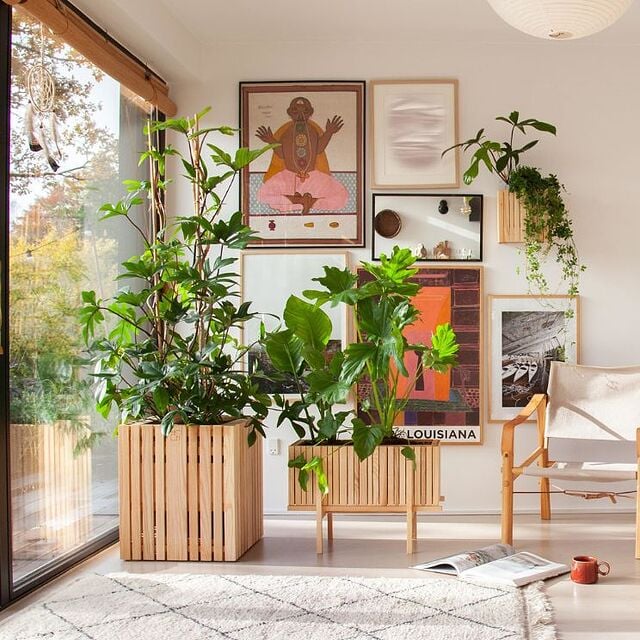


How to use a self-watering pot step by step? Practical tips
The pot itself is not enough – you need to set it up correctly, especially after potting a new plant. Therefore, make sure to read the user manual provided by the manufacturer, as each product may work slightly differently.
Below you will find general, practical tips to help you get the absolute most out of your self-watering pots.
System setup guide:
- Choose the right size – roots need room to grow, but the pot shouldn't be a "swimming pool" for a tiny seedling (too big = water is drawn up too slowly)
- Prepare the drainage (in traditional systems) – pour 2–3 cm of expanded clay at the bottom of the insert
- Pot the plant in the right substrate – well-draining and tailored to the plant's needs: universal, succulent mix, orchid bark, etc.
- Water classically from above for the first 1–2 weeks – just like a normal pot, until the roots grow and reach the moisture zone
- After this period, start filling the reservoir – use the dedicated opening or inlet
- Monitor the water level indicator – top up when the level drops to "minimum" or almost disappears
The frequency of topping up depends on several factors:
- the size of the plant and the development of its root system
- the season – in winter, plants "drink" much less than in summer
- temperature and sunlight – a south-facing windowsill vs. a shaded office are completely different environments
- the type of plant – tropical species use more water than succulents
Which plants benefit the most from a self-watering pot?
Most classic houseplants can grow in self-watering pots, but some species absolutely love this setup and respond exceptionally well to it.
Plants that benefit the most from automatic watering:
Herbs that need constantly moist soil:
- basil (notorious for drying out with irregular watering)
- mint
- flat-leaf parsley
- thyme
- Perfect for a kitchen windowsill by the window
Green plants with large leaves:
- monstera deliciosa
- epipremnum (pothos)
- philodendrons
- weeping fig (ficus benjamina)
- dieffenbachia (experts point to up to 40% longer lifespan in such pots)
Balcony and terrace flowers:
- geraniums
- petunias
- begonias
- especially in planter boxes exposed to rapid drying in full sun
Office plants:
- ZZ plant (zamioculcas)
- snake plant (sansevieria)
- dracaena
- here, it's mainly about convenience and less frequent watering in spaces where no one has time for daily care
Note: some succulents and cacti prefer drier conditions. For these, fill the reservoir less frequently or only halfway – these plants do not require constantly moist soil.
A self-watering pot is also perfect for places where plants aren't thought of every day: receptions, lobbies, waiting rooms, office corridors. This is where healthy plants can survive for weeks between visits from a caretaker.



Can you overwater or harm a plant in a self-watering pot?
"Won't the plant drown?" – this is the most common question. "Won't the roots rot?" – is the second. Let's clear up these doubts, as they are valid but easy to avoid.
Facts about plant safety in self-watering pots:
- most pots have safeguards: an overflow hole or a "max" indicator showing the maximum water level,
- if you constantly keep the level above "max", you can cause root rot – but you'd really have to try hard,
- for plants that like dry soil (cacti, succulents), fill the reservoir less frequently or only halfway,
- healthy growth requires the right balance – the system helps maintain it, but it won't replace basic knowledge of a plant's needs.
Outdoors (balcony, terrace), draining excess rainwater is important. Look for models with drainage holes and plugs that can be opened during the rainy season. This is crucial for long-term use in changing weather conditions.
A practical tip: once every few months, it is worth flushing and cleaning the reservoir and wicks. This removes mineral deposits and prevents algae growth – especially if you use tap water rich in minerals.
Remember: a self-watering pot is a tool that helps plants cope better with your imperfections as a caretaker. However, it is not a fully hands-off system – it requires understanding the basics and occasional monitoring.
Where and when does a self-watering pot work best? (Home, balcony, office)
Self-watering pots are highly versatile – they work wonders in various spaces and conditions. This is a key argument for anyone interested in urban gardening and growing plants in limited spaces.
Specific locations and uses:
In the flat:
- windowsills with herbs and smaller plants
- shelves with plants in the living room
- tall pots by the sofa with impressive philodendrons
- bathrooms with moisture-loving plants
In the kitchen:
- herbs in dedicated self-watering pots by the window
- fresh basil, mint, or parsley always at hand when whipping up beautiful dishes
In the office:
- plants in open-plan spaces where no one has time for frequent watering
- receptions with impressive, healthy plants
- meeting rooms visited sporadically
On the balcony and terrace:
- self-watering boxes on the railing with geraniums
- large balcony pots with overflow holes
- containers that collect rainwater but protect against flooding
Periods when the system is especially helpful:
- Summer (June–August) – rapid drying of the soil, holiday trips, and heatwaves that make plants drink water in the blink of an eye
- Heating season (November–March) – dry air in flats, and radiators under the windowsill drying out the soil faster than you think
Statistics show that up to 70% of houseplants die due to improper watering – meaning they get too much or too little water. Self-watering pots reduce this risk to a minimum, making them the perfect solution for anyone who wants to enjoy healthy plants without the daily stress.
What is a self-watering pot: Summary
A self-watering pot is a simple, proven watering system that works on the principle of capillary action. It allows plants to draw the right amount of water from the reservoir exactly when they need it. Whether you are an experienced gardener or just starting your plant journey – this solution can completely transform your approach to growing.
Start with one pot – maybe with basil in the kitchen or a monstera in the living room. See for yourself how much this innovative solution will ease your daily plant care. Or perhaps you have holiday plans? This is the perfect time to test how the capillary system looks after your plants while you are away.