Wondering how to organise a comfortable and ergonomic workspace in the peace and quiet of your own home? Good space management is half the battle! The other half is furnishing it appropriately and organising your workspace. Find out how to create a modern home office that will surprise you with both its design and functionality.
How to set up a home office?
Remote work requires self-discipline, good organisation, and the ability to separate your private and professional life. That's why one of the most important issues to remember when working from home is to designate a dedicated space for your home office. Those who have a large house and can successfully dedicate a whole room to a home study won't have a problem with this. However, we want to convince you that even if you have a small flat, you can arrange the space in such a way that you carve out a functional workspace for yourself.
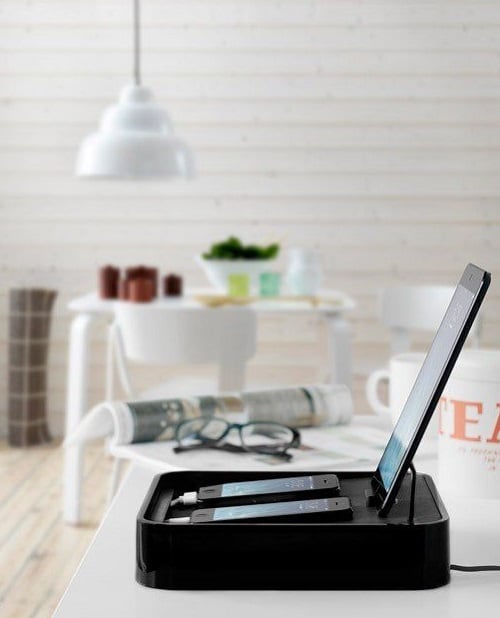
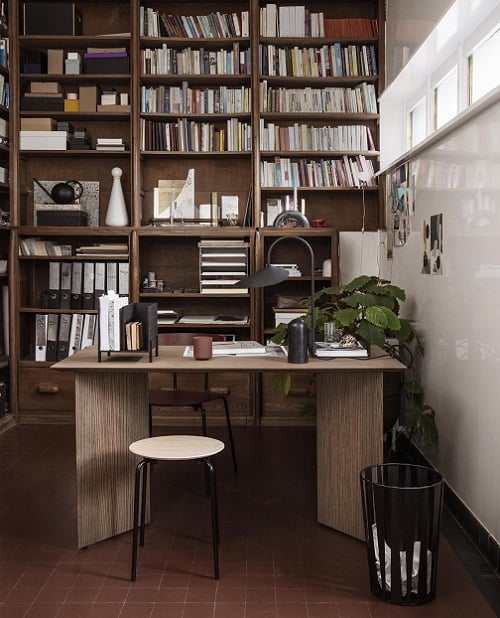
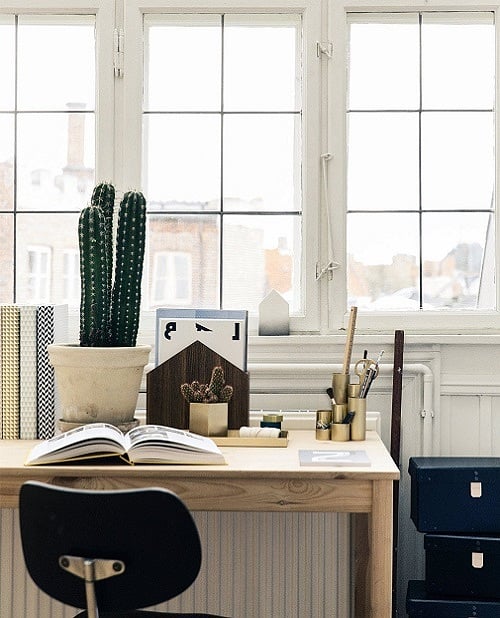


It's worth organising your home office away from the area where household members spend their daily lives. If this isn't possible, however, a good idea is to separate the study area using a curtain, shelf, screen or partition wall. This way, no one will disturb you and you'll be able to concentrate better on your work. You can set up your home office in the living room, bedroom, in an alcove in the hallway, or even in the kitchen, provided you have a comfortable, large table with storage options. The latter solution is particularly good for small flats.
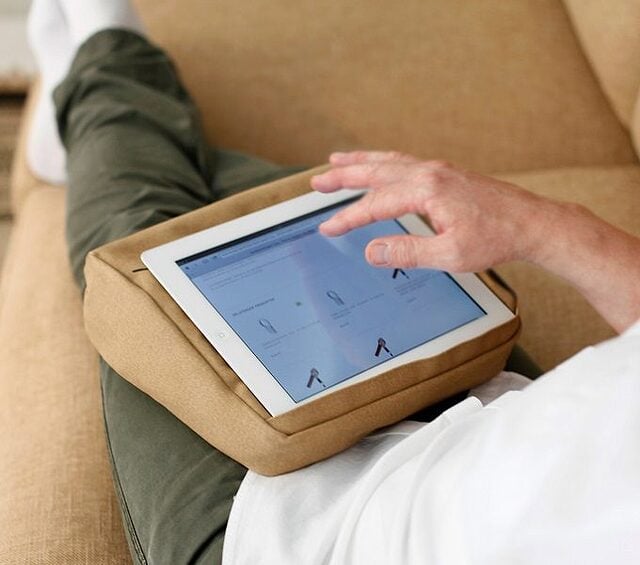
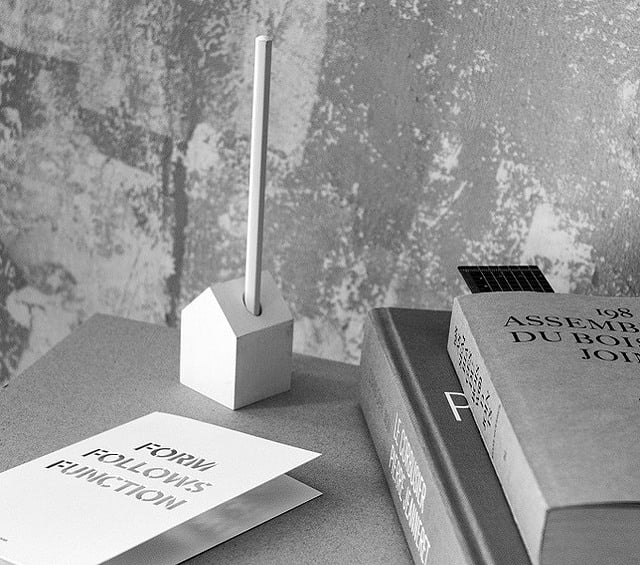


Which furniture to choose for a home office? Home office inspiration
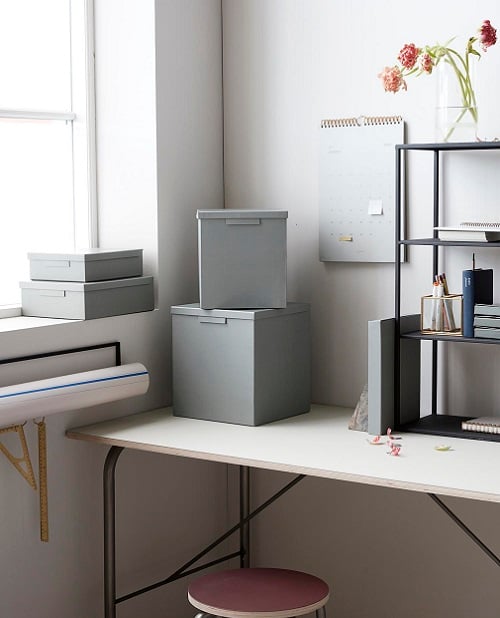
A properly chosen desk and chair are the most important pieces of furniture for a home study; it's hard to imagine any office without them. However, other home office furniture will certainly come in handy, such as shelves and racks for various binders, organisers, or document boxes. If you have the opportunity, equip your home study with a cupboard or chest of drawers with drawers to store all your bits and bobs. An interesting solution, especially in small interiors, is to use a mirror, which optically enlarges the space. If you're arranging an office in a small flat, think about equipping it with a fold-out desk or a folding chair with adjustable height.
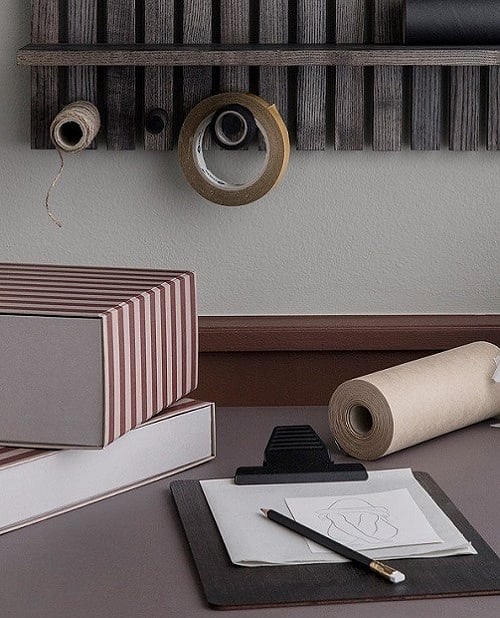
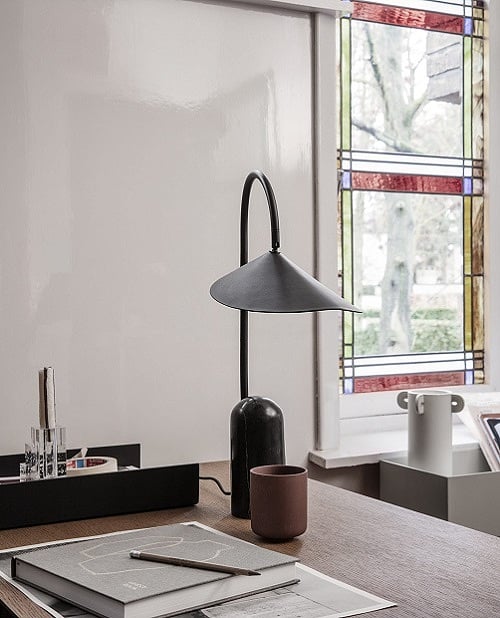
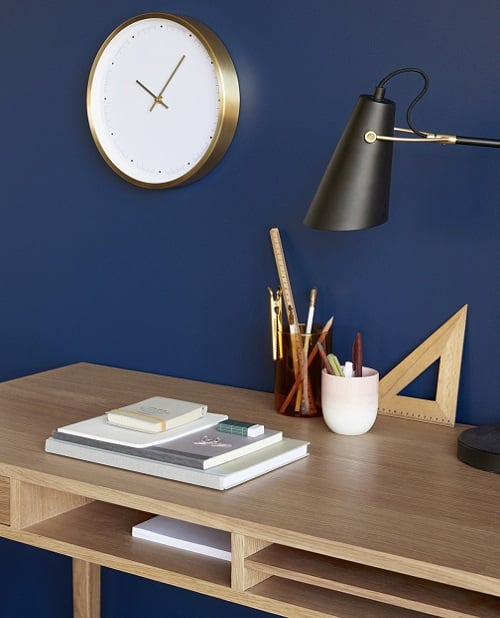


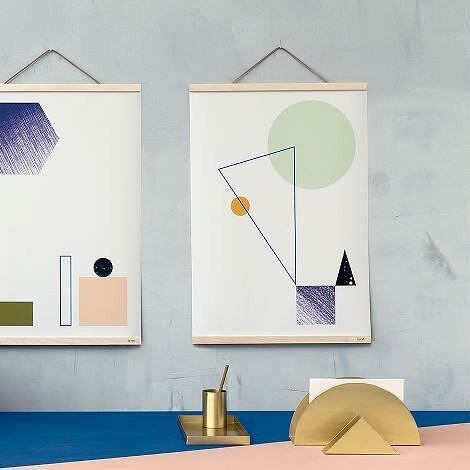
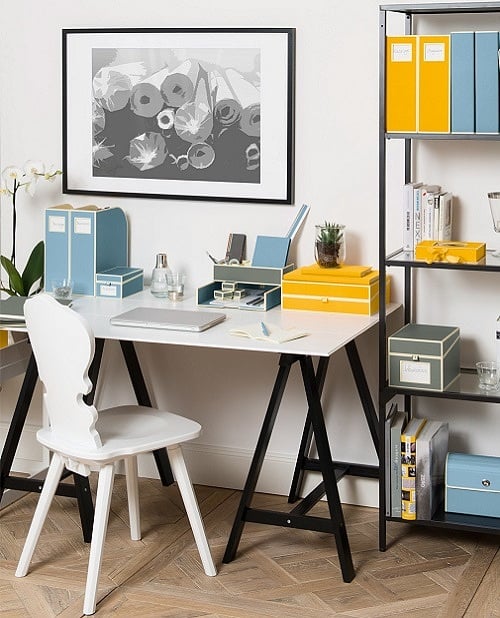
You now know what furniture is essential for a home study, so it's worth thinking about the interior arrangement itself. Consider the colours and style in which you want to furnish the space. Recommended colours for studies are pastels and earthy tones, i.e. beiges, browns, greens, but also various shades of white and delicate shades of blue. This type of colour scheme promotes concentration. You work more efficiently in bright, uncluttered, well-organised rooms. With this in mind, it's best to furnish your home office in a Scandinavian, minimalist, modern, or classic style. Although it's worth enlivening such a calm arrangement with one or two accents. A designer wallpaper for the office or eye-catching graphics can help.
Small decorations make an excellent backdrop for work. Plant pots and fresh flowers in stylish vases, which have a beneficial effect on well-being, wall clocks, photographs placed in stylish photo frames or posters with motivational and encouraging slogans for work, all work perfectly.

How to position your desk in a home office?
The positioning of the desk in relation to the window plays a key role in the comfort and convenience of work. The ideal solution is to place it sideways to the window, preferably on a north or east-facing wall, so that the sun's rays illuminate the workspace but do not interfere with our duties, causing glare or dazzling us.
The positioning of the desk in relation to the door is also important. It should not be placed with your back to the door, as sitting with your back to the room entrance can cause anxiety, distraction, and a lack of a sense of security. The feeling that someone is standing behind us adversely affects work performance. The desk should be positioned so that you have everything under control. Ideally, facing the door and with your back to the wall.
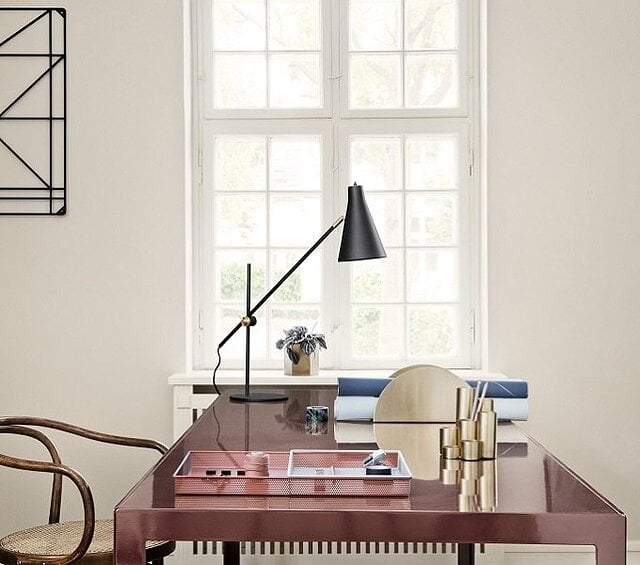
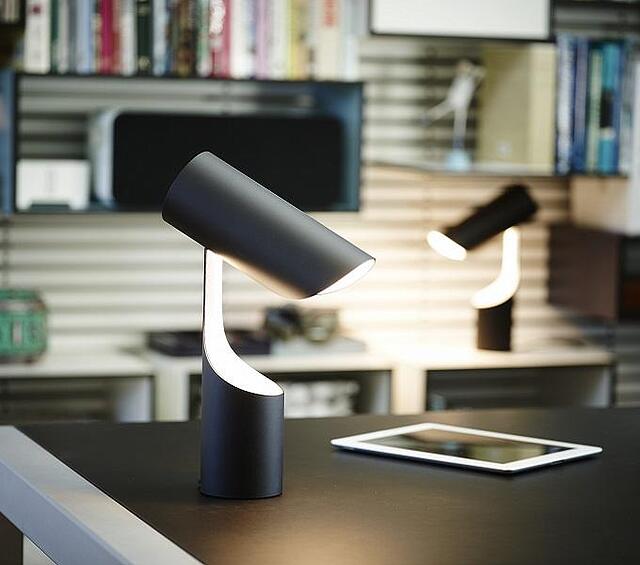


However, in small flats, it's worth considering placing the desk in the corner of the room. Compact corner desks work perfectly in limited spaces. A practical idea is also to use the windowsill as an extension of the desk and arrange essential accessories on it.
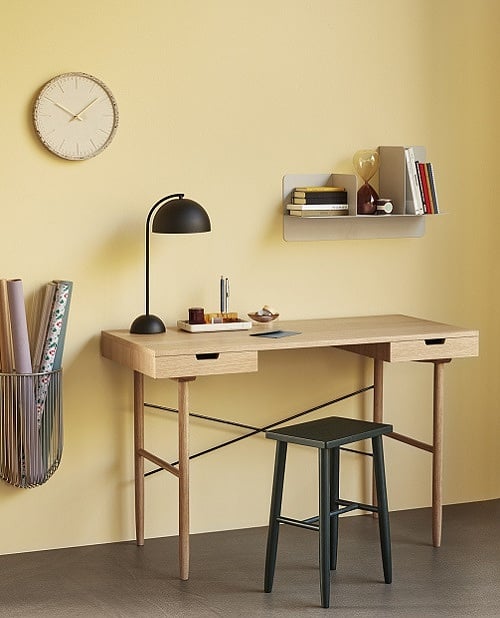
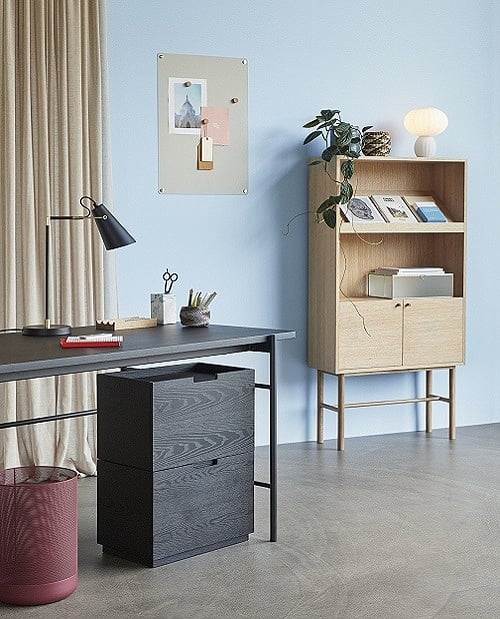
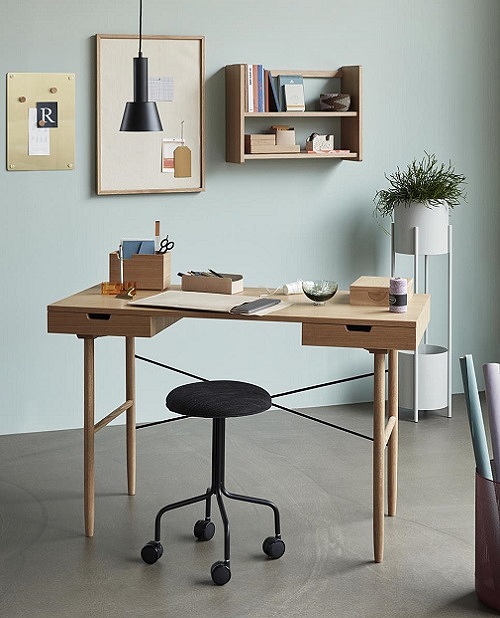


How to organise your desk?
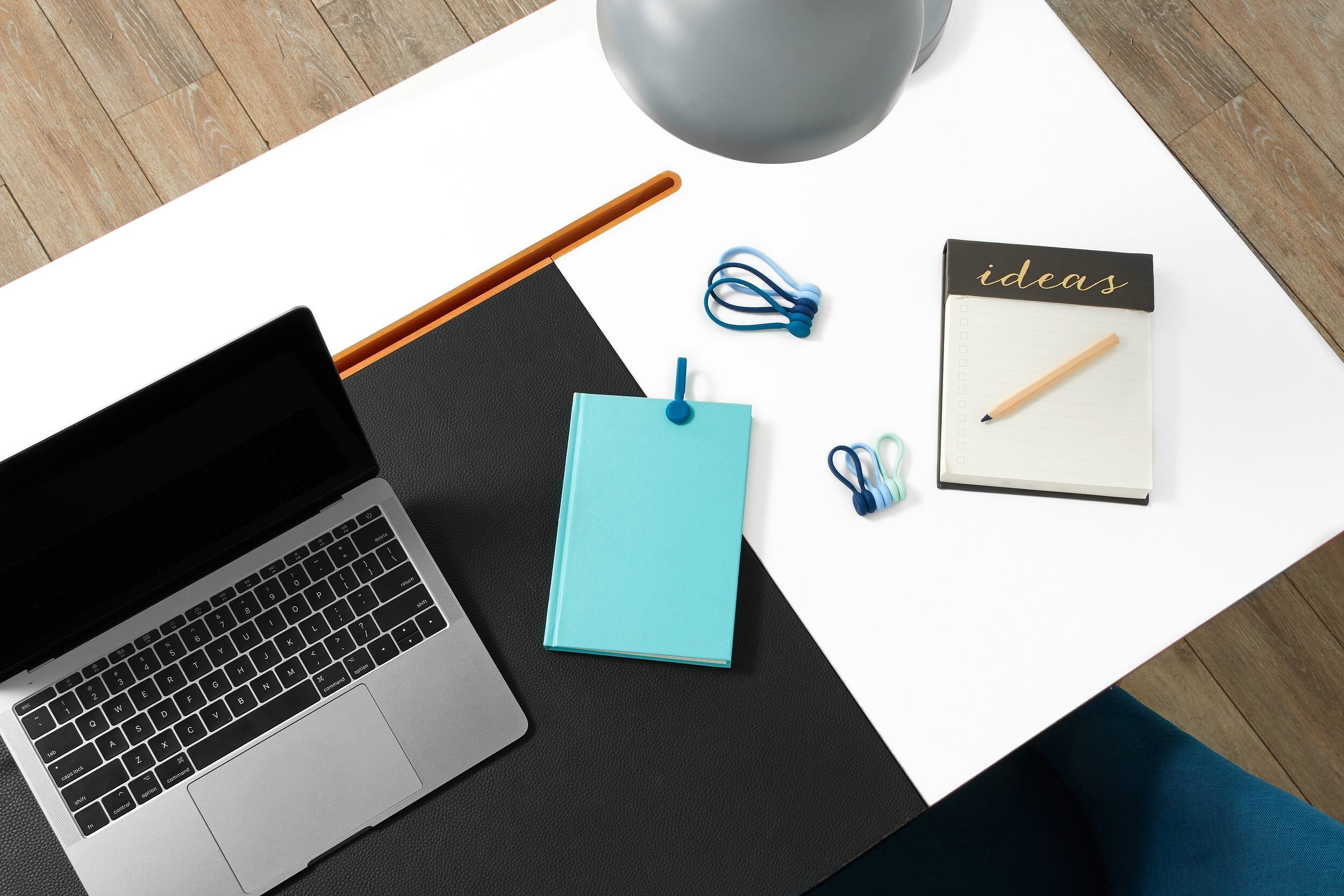
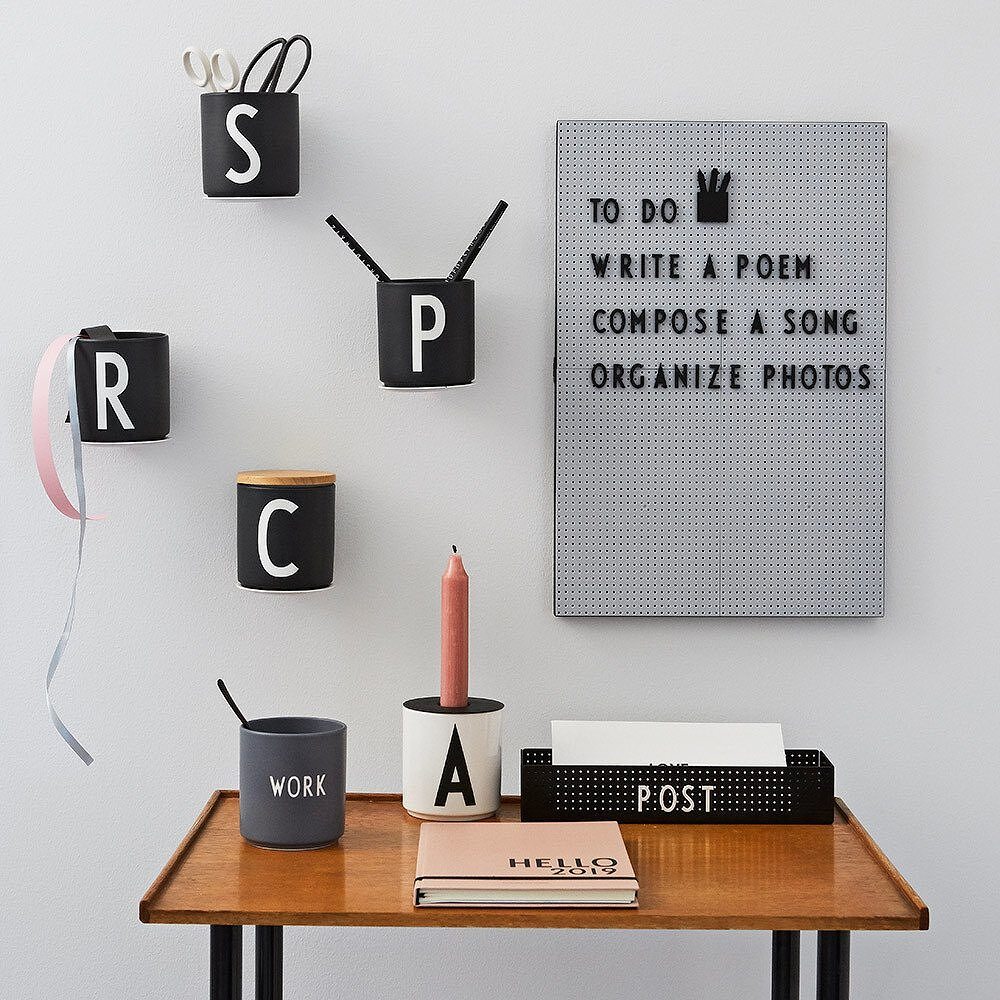
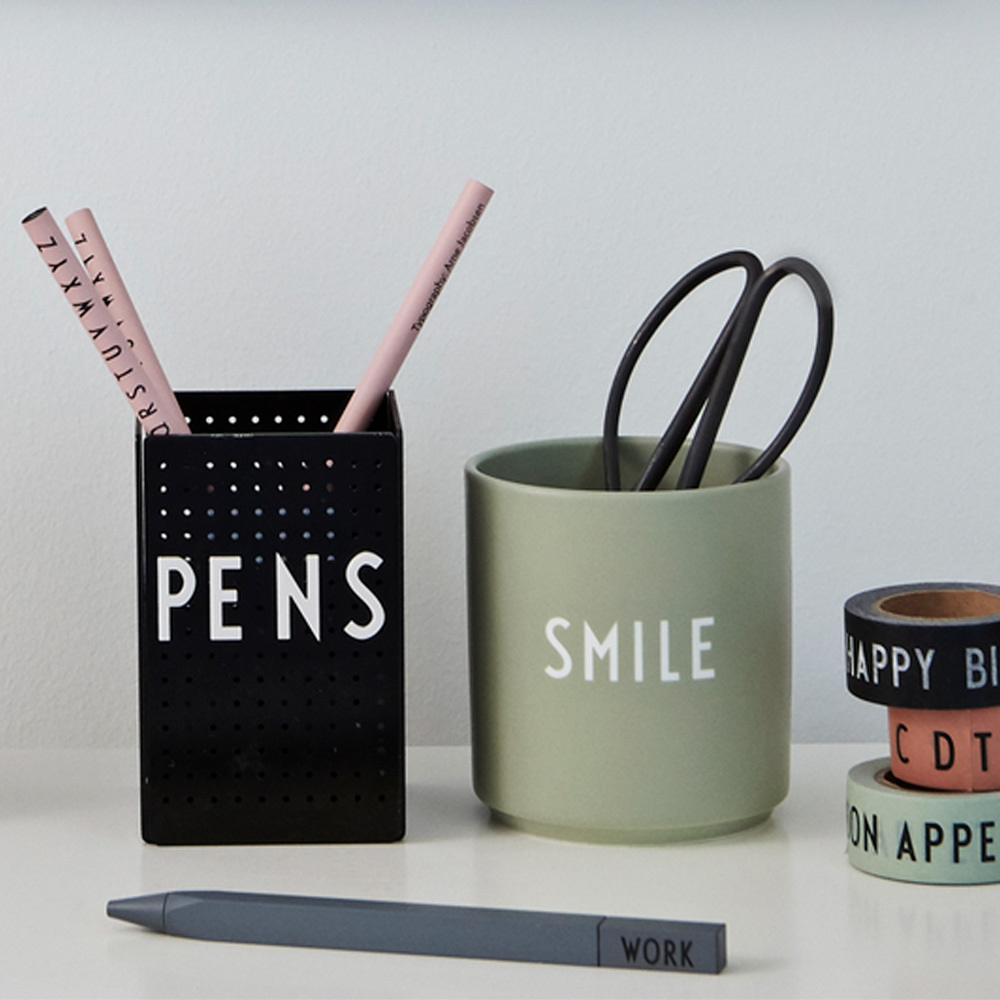
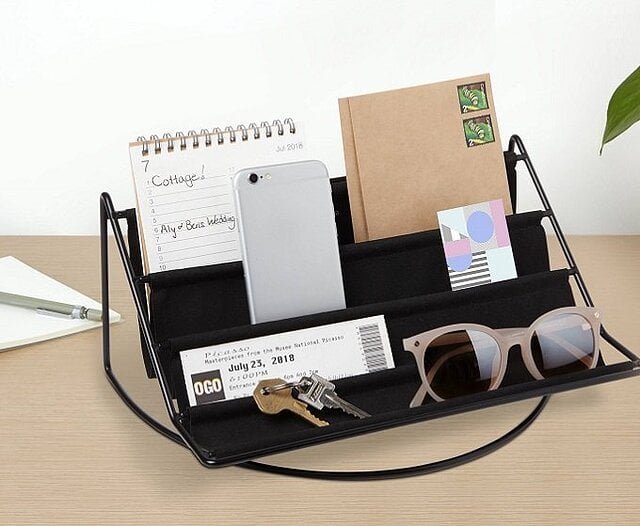
Proper desk placement is no less important than its proper organisation. Pens, staplers, notebooks, binders, folders are just examples of office accessories often used at work. To control the chaos and keep your desk tidy every day, you need to ensure that every item has its designated place. Various desk organisers will help you with this, allowing for convenient storage of all the most necessary things. Such desk organisation will also make it easier to find individual accessories.


Tip
It's also worth hanging a magnetic board and magnets above the desk, which will help organise papers with goals, tasks, or important dates written on them.
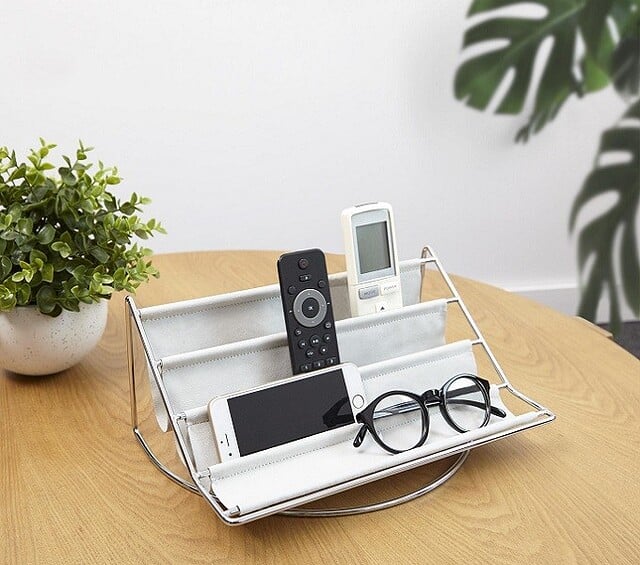
A desk in a home study is also a place that often has to accommodate not only a laptop but also a printer, sometimes additional monitors, a smartphone, headphones, a USB stick, or USB cables. Phone and computer accessories will help you manage electronics, while organising the cables associated with them will be much easier if you equip your home office with functional cable boxes and holders.

Note
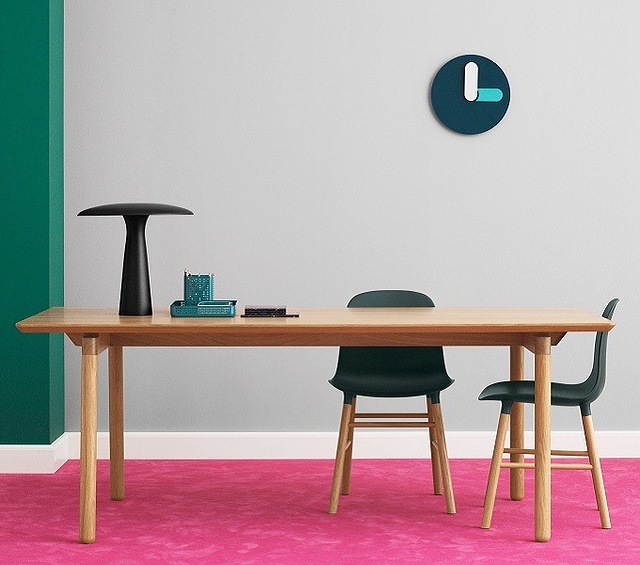
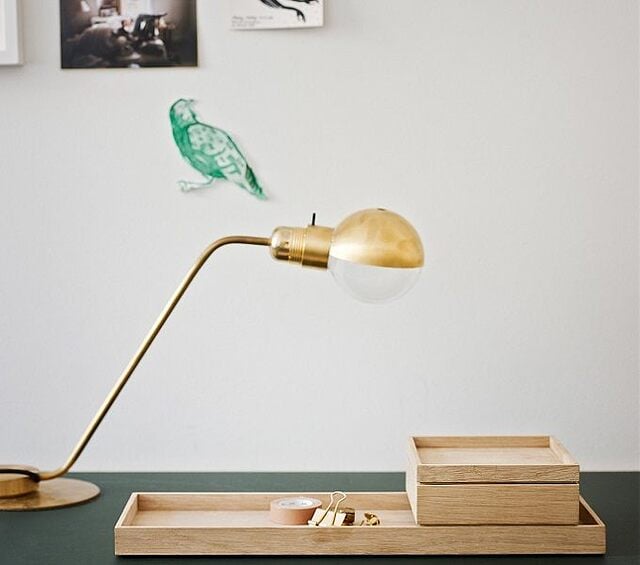


Ergonomic workspace – what to remember?
Did you know that the position we adopt when sitting at a desk affects our health, well-being, and comfort, as well as the efficiency of our work? How to arrange an ergonomic workspace in a home office and how to take care of your health while performing daily duties?
Let's start with the choice of desk, which should be wide and deep enough so that we don't have to adopt an unnatural and uncomfortable position. It is indicated that desk dimensions should be around 160x80 cm, although much depends on the nature of the work, the amount of materials, or electronic equipment on the desk. Leaving adequate space under the desk is also important for work comfort. It is indicated that the free space for legs should be 65 cm high, 70 cm deep, and 80 cm wide. Furthermore, it should be remembered that the desk top should be at such a height that when holding your hands on it, the angle formed between the arm and forearm is straight.
The proper position of the monitor and its angle of inclination are of great importance for health and maintaining proper body posture. The distance of the monitor from the eyes should be 60-75 cm. The monitor should be placed at the height determined by the line of sight. The screen should be viewed straight ahead and slightly downwards. You should also remember that light should not fall from either the front or the back of the monitor.
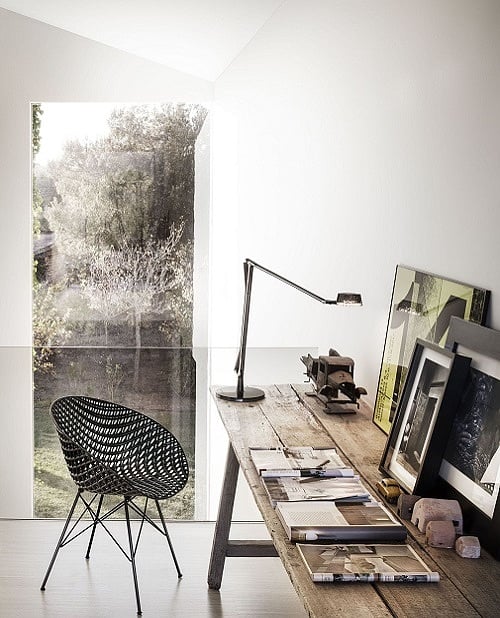


Another aspect to pay attention to is the choice of an office chair or armchair. Such a chair should be equipped with an option to adjust the seat height, as well as the ability to recline the backrest backwards. The backrest during work should be slightly reclined backwards, by about 10 degrees. When sitting on the chair, the angle of inclination of our torso in relation to the rest of the body should be slightly more than 90 degrees. You should not work in a forced position, i.e., with your torso bent forward. Furthermore, the backrest of the chair should be profiled and properly adapted to the natural curvature of the spine. Also, choose a model equipped with armrests. They should be 19-25 cm from the seat. A headrest is also a very comfortable solution, allowing you to comfortably rest your head at any time. Moreover, in the case of an armchair, wheels are a practical addition.


The choice of lighting is also important. Poorly chosen lighting can lead not only to a drop in efficiency but, most importantly, to a deterioration of our eyesight. That is why it is so important to choose appropriate light sources for your home office, which will allow you to take care of your eyesight, and thus improve your work comfort. Central lighting, providing soft, diffused, and gentle light, is important, but the key role is played by bedside and table lamps. For functionality and work comfort, it is worth choosing a desk lamp whose height and angle of light can be easily adjusted to the currently performed activities, e.g., directing the light beam onto a notebook or a specific document. Furthermore, the desk lamp should have a stable base and not take up too much space on the desk.
It is also worth taking care of the air quality in your home office, which has a huge impact on our health and well-being. This applies to both dry air and air containing harmful substances. Therefore, a home office should be equipped with an air purifier and humidifier. We particularly recommend the extremely practical and compact ADE air humidifier, which works when connected to a USB port.
Note
A properly organised and arranged workspace at home will translate into comfort and convenience, which will certainly have a positive impact on our productivity and efficiency at work.