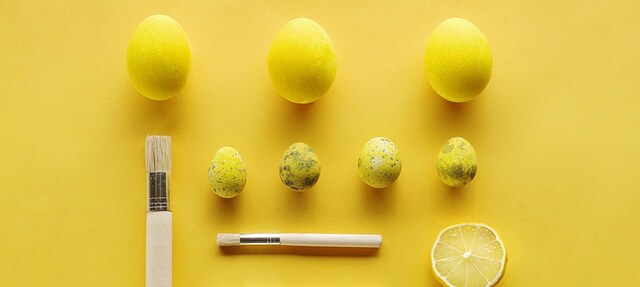
Easter eggs, paintings, scratchings... And you, in what ways do you know how to make Easter eggs? Together, let's remember the traditional methods our grandmothers taught us. Christmas preparations can be great fun for the whole family - it will be fun and colourful!
A long tradition of egg painting
The tradition of decorating eggs has its roots in Ancient Rome
Did you know that the first Easter eggs were already created in ancient Rome? The custom of painting eggs appeared on European soil with the Persians. At the time, it was associated exclusively with pagan customs, and decorated eggs were meant to act as a talisman - to protect from evil and ensure happiness and prosperity. They were given to pets to make them fertile, buried in the ground to guard homes and newborn babies were bathed in water with painted shells.
Symbol of life
Over time, Easter eggs also became a symbol of Easter. Today, eggs are for us a sign of hope and reborn life. We prepare them every year, and depending on the making technique, the festive eggs are given different names.
Ways of decorating eggs ...
After soaking eggs in a colourful broth, we obtain the traditional " kraszanki", also known as "paintings" or "bull's eyes". Easter eggs, on the other hand, are made by applying wax to the shell and then soaking the egg in a previously prepared dye. Scratchings require patience and concentration - they are made with a sharp tool, scratching patterns into the previously painted shell. You can also decorate the eggs with paper cut-outs to make stickers. Decorate them with fabric, thread or coloured ribbon and they become stickers! For example, you can use Kitchen Craft decorative muffin cups to decorate your eggs - stick them on top of the egg for an elegant cap!
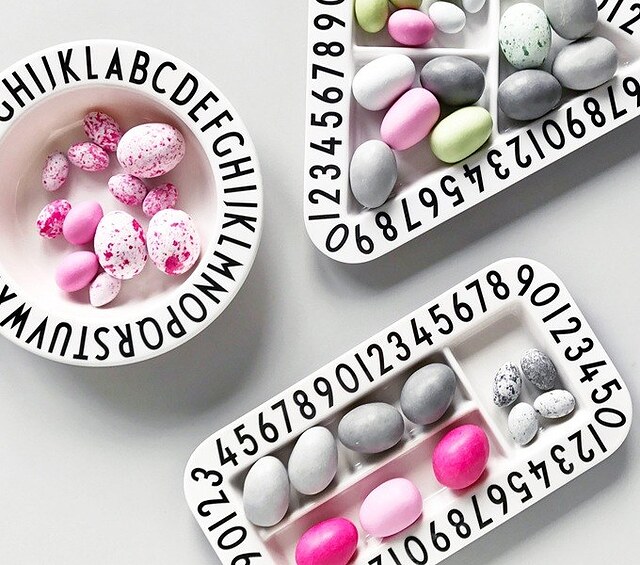

Decorate eggs - fun for the whole family
Preparing Easter eggs is fun for the whole family!
Preparing fabulously colourful eggs is not only fun for children. The whole family can create wonderful Easter eggs, just in time for the Easter basket. Some traditional ways may be too much for you to handle (we don't recommend using sharp tools either), so here are 5 child-friendly and modern ideas for beautiful Easter eggs.
- You don't have to buy any ready-made colouring material to create these wonderful little paintings. You can find everything in your own kitchen - economical and, above all, ecological!
Use onion skins to create beautiful brown-red eggs. Boil the shells in a large pot for about 15 minutes. Of course, the more you throw them in, the darker the shade you will get. Towards the end of cooking, place the raw eggs in them. Leave them in there until they have cooled down.
Now it's time for the yellow ones! You need a saucepan, half a litre of water and one packet of turmeric. Just like last time, place the raw eggs in the mixture and boil for 7 minutes.
At the same time, you can prepare a second pot into which you put shredded red cabbage or grated beetroot. The cabbage will give the eggs a blue colour, while the beetroot will give them a red colour. Boil the cabbage for about 30 minutes, and the beetroot for only 3 - it will lose its colour when boiled. Now simply place the pre-cooked eggs in the vegetable stock. Keep them in it until they get the right colour. - Our next suggestion is to make homemade veggies. Stock up on plenty of eggs and use any you have painted beforehand. Use glue and anything else you can get your hands on: sequins, beads, feathers, ribbons, yarn, and tissue paper. Now you just have to put your manual skills into action and the ideas will come!
- You can also make traditional Easter eggs together. Before putting the eggs in the colouring broth, decorate them with wax patterns. Apply it to the shell with a wooden toothpick. Create your own compositions - asymmetry and small imperfections will add to their charm! Boil for a few minutes in the coloured stock, and when the eggs have cooled, wipe them with a cloth.
- You can replace the wax patterns with... a leaf! This is a great idea for an original Easter egg with a "stamp". Place a small leaf on the egg and then wrap it tightly with a stocking. Now all you have to do is put the egg in the dye and you're done!
- An extremely quick yet effective way is to paint the eggs with markers. The colours available on the market will allow you to create real works of art! Draw patterns, make little slides, and put words or holiday greetings on them.
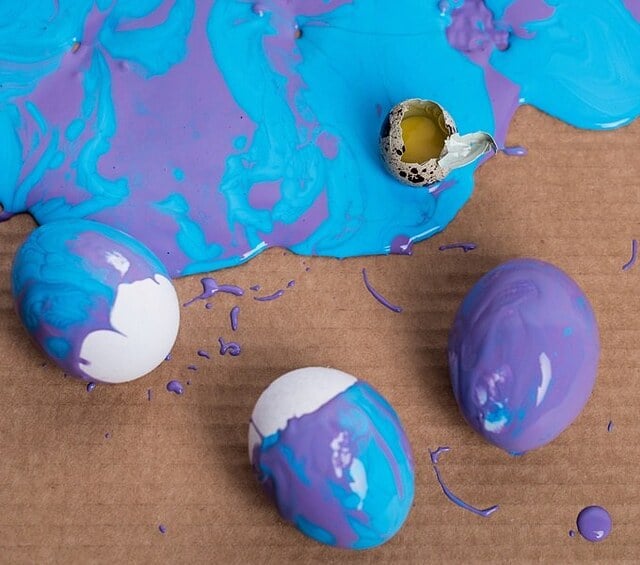

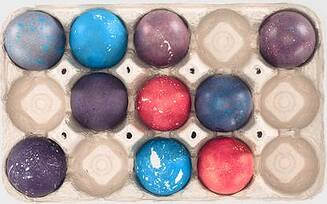
This will come in handy!
Boiling eggs is not an easy feat. When the water starts to boil, the eggs jump up, bouncing one against the other and knocking against the walls of the pot. Although we don't worry about small cracks on a daily basis, when it comes to Easter eggs we should avoid them. On painted eggs, even a small scratch will be visible. However, it is enough to put the eggs in a special basket for the duration of cooking and they will be fine.
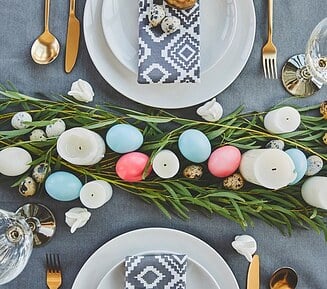
When you're ready to paint your eggs, put them on a nice plate or place them on a decorative stand - they make a great decoration for your Christmas table. Also, stock up on a special basket to carry the eggs to keep them safe. When you go on your Christmas visit, take your handmade Easter eggs with you and give them to your loved ones!
Ornamental curiosity