February 2nd is International Positive Thinking Day. Scientific research proves that a positive and optimistic approach to life can prolong it, and certainly make it more enjoyable. Well, it's easy to say, but how do you do it?
Think positive! Smile!
Do these slogans ring a bell? Probably all too well. But what's there to be cheerful about when it's another sunless day outside, holidays are a distant dream, and the dog has once again made a bed on our white jumper?
But here's the good news: positive thinking can be trained, just like a muscle.
According to psychologists, various things happen to us in life and they usually repeat themselves, so we don't have control over them, but what we do have control over – is our reaction to them! That's why it's important that we can develop thought patterns that will allow us to get through various life's ups and downs "with a dry foot" (unscathed).


Why is it worth being an optimist?
The answer is a bit ironic – it simply pays off. American psychologist Kirsten Harrell, who initiated International Positive Thinking Day, proved with other scientists that the risk of heart disease, depression, cancer, or strokes decreases by as much as 10% depending on our way of thinking. Our body knows when we are less stressed and can react to it.
Furthermore, optimists less often suffer from sleep disorders, are less susceptible to professional burnout, have greater motivation to achieve professional and private success, and also have a larger circle of friends.


How to become an optimist?
Ah, if only there were universities where we could learn this. But luckily, there are scientific studies and psychological materials from which we can glean a lot for ourselves!
Change your way of thinking
A brief guide to optimism:
- Try to live in harmony with yourself – this is not as simple as it sounds. But if you trust your intuition, experience, and learn to set boundaries, you will have a greater sense of agency and inner coherence.
- Look for what brings you joy – for everyone, this can be something different. Some will be happy running a half-marathon, others will be content sitting on a bench in the park. Someone might be pleased with a handmade cup they crafted in a pottery class, while another might prefer trekking in the mountains. Experiment, search, open yourself to new experiences, and don't worry in advance that you won't like it. You can always back out at any time, or perhaps you'll positively surprise yourself?
- Trust yourself – assume that what you undertake will succeed. And if it doesn't, it's not the end of the world; clearly, it wasn't the right time, and you need to move on. Every such experience should be seen as a valuable lesson, not a failure.
- Practise gratitude – create an important ritual and always before falling asleep, spend 5 minutes making a mental list of what you are grateful for today. These don't have to be grand things like winning the lottery. It's enough that you have a comfortable bed, the neighbour smiled nicely, or you managed to buy the most round and red apple in your life. After all, our day is often made up of small things.
- Be here and now – well, yes, easy to say, it's such a trendy slogan. But how to focus on the present moment when we're rushing to pick up the child from nursery, thinking about what will happen at work tomorrow, and still need to collect a jacket from the dry cleaner because it's been waiting for us eagerly for two weeks? Well, we can't stop life, but we can pause for a moment between duties and smile at our dog, who can practise being in the here and now like few others. For those 5 minutes, let's just be for them, turn off the phone, and enjoy the walk together.
- Get moving – this, unfortunately, is not just an empty slogan that exercise will ensure our health. However, if you don't have the soul of an athlete, then simply plan regular walks from work, get off a few stops earlier and walk a little. It really clears the head and trains the body for greater efficiency and health.
- Surround yourself with positive people - there's a saying that we are like the people who surround us. By force of habit, we adopt their way of thinking, seeing the world, and solving problems. That's why it's so important to have as many inspiring, strong, positive people around us as possible, who will be our wind in the sails.
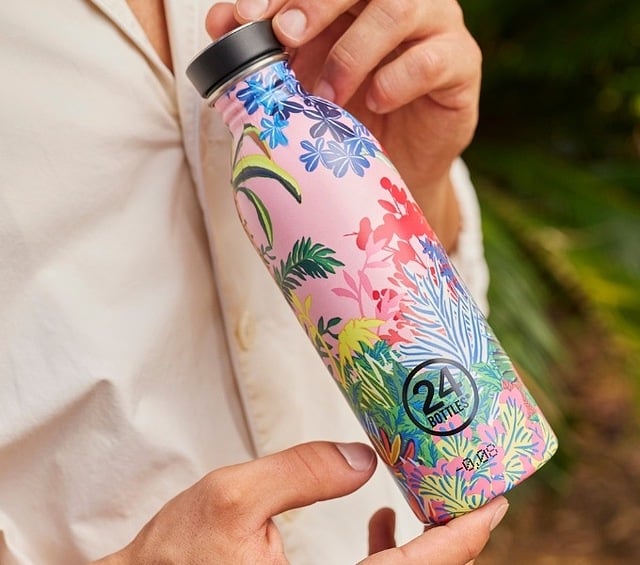
Products full of joy


Is optimism overrated?
Finally, we want to say, somewhat perversely, that being an incurable optimist can sometimes be harmful! Many psychologists warn against seeing only the "bright side of the force," because it is simply distorting reality. The world is not pink, nor black and white; it has various shades, sometimes it's better, sometimes worse, and we should also perceive this and be able to deal with it.
We should also be open to our various emotions – sometimes we will be cheerful, sometimes sad, sometimes we feel like laughing, and sometimes we don't, and all of that is perfectly fine. Observing your emotions and allowing them in is an incredibly valuable skill! So let's treat positive thinking as a tool for a better life, but let's not try to force it upon ourselves.