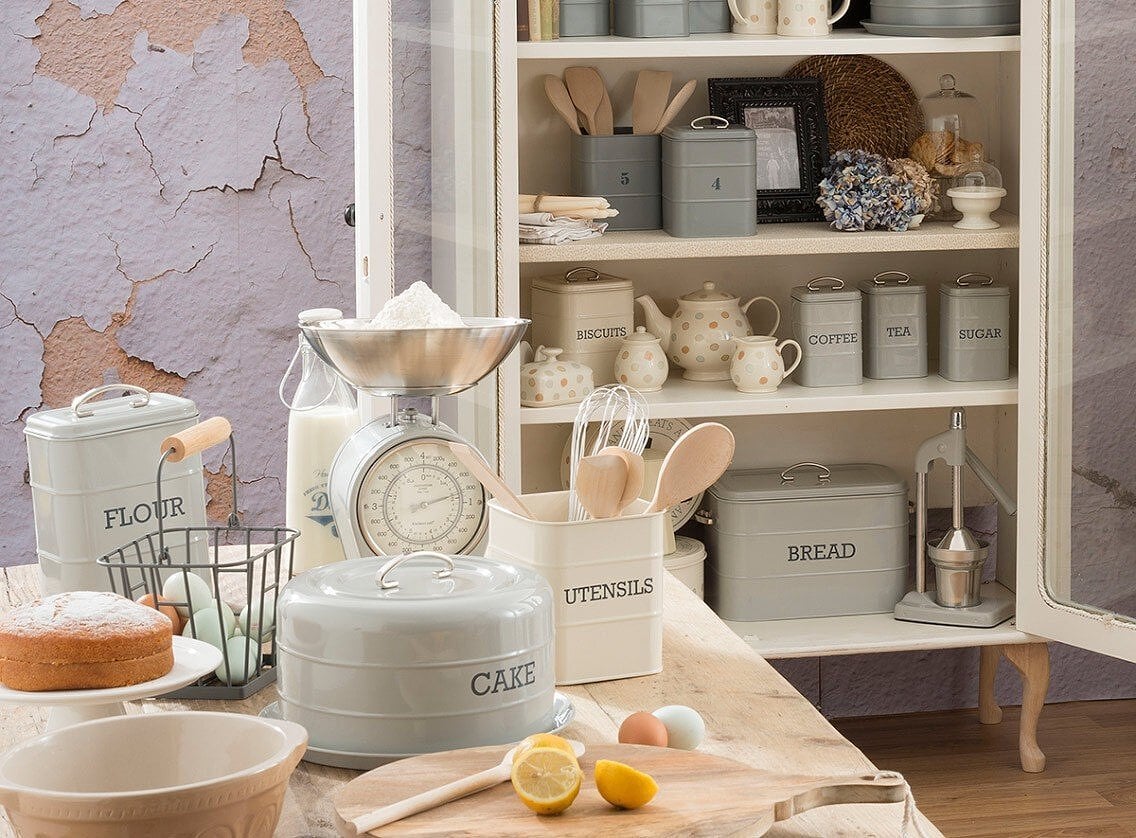
The kitchen is an interior where everything must be well thought out and planned. It should be pretty and aesthetically arranged, but above all, it must be functional, ergonomic, and guarantee convenient and efficient meal preparation. How to design the perfect kitchen?
Pros and Cons of Open-Plan and Closed Kitchens
When embarking on the design of your dream kitchen, the first thing to consider is whether you prefer an open-plan space connected to the living room or a closed kitchen. We hope the following comparison of the advantages and disadvantages of both solutions will help everyone choose the type best suited to their needs.
Pros and Cons of an Open-Plan Kitchen
Pros:
- greater space, visually enlarging both the kitchen and the living room;
- opportunity to install an island or create space for a dining area with a table;
- spending time with family who are relaxing in the living room;
- ability to cook and keep an eye on playing children simultaneously or help a child with homework;
Cons:
- necessity of maintaining constant order;
- penetration of smells and noise from the kitchen into other rooms;
- disturbing other household members relaxing in the living room;
- the kitchen and living room arrangement should be consistent, harmonious, and maintained in the same style;
Pros and Cons of a Closed Kitchen
Pros:
- smell does not escape into the living room;
- noise from cooking or the extractor fan is not heard in other rooms;
- no visible mess, e.g., dirty dishes; this is particularly important if you don't like to clean up immediately after preparing a meal;
- extended lifespan of living room furniture, due to lower air humidity;
- possibility of restricting access to the kitchen for children or pets;
Cons:
- requires more space, therefore not ideal for small flats;
- takes up hallway space for doors, and also visually reduces space due to additional walls;
- limited ability to supervise children playing in the living room;
- no possibility of installing an island;
- the person preparing the meal cannot simultaneously spend time with household members or guests;
Regardless of the type of kitchen we choose – one thing is certain. Every kitchen should be functional and provide comfortable and convenient meal preparation.


A Functional Kitchen – What Does it Mean?
A kitchen should be ergonomic, meaning comfortable and safe, and daily meal preparation in it should proceed quickly, efficiently, and pleasantly. In a functional kitchen, everything must be within our sight and reach. The sink, countertop, refrigerator, and hob should be positioned so that while cooking, you don't have to run all over the kitchen from one appliance to another, covering large distances. Furthermore, cupboards should be hung at the appropriate height and equipped with practical systems allowing free access to the accessories stored within them.
Hence, the rules for arranging a kitchen are so crucial, comprising: defining zones and the working triangle, as well as establishing other dimensions and distances to streamline kitchen tasks. Thanks to applying these rules, even a small kitchen or an attic kitchen, which are often considered difficult to arrange and organise, can turn out to be a functional and comfortable place for cooking and baking. How to arrange a small kitchen and a large one, open-plan and closed, to achieve a more spacious, convenient, and functional interior?
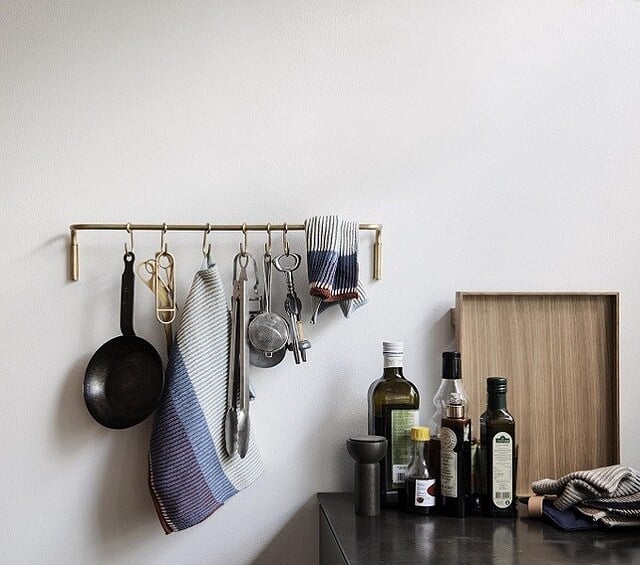


Functional Kitchen – Division into Zones
A key issue when designing a kitchen is the delineation of its zones. As a rule, 5 basic working zones are distinguished, which make a kitchen functional and ergonomic.
- Storage Zone
Every kitchen needs a place where food supplies can be stored. This zone should contain food products that need to be kept refrigerated, as well as those that do not. Therefore, the storage zone must include a refrigerator, freezer, and a pantry cupboard.
- Preparation Zone
This is the place where the most frequently used items and accessories in the kitchen should be located, such as: plates, mugs, cutlery, cups, jugs, as well as food storage containers or small household appliances, such as a coffee machine, toaster, or cordless kettle.
As for furniture, this zone should feature lower and upper cabinets, preferably built-in all the way to the ceiling, to optimally utilise the available kitchen space, and drawers with full extension guaranteeing convenient access to the accessories placed inside.
- Washing Zone
This zone includes the sink and dishwasher. It's also a place for drying dishes, storing rubbish, and keeping detergents. Indispensable in this zone are various types of waste sorters, which should be placed in the cupboard under the sink, dish drainers and dishwashing accessories, as well as a drawer or a larder unit for cleaning supplies.


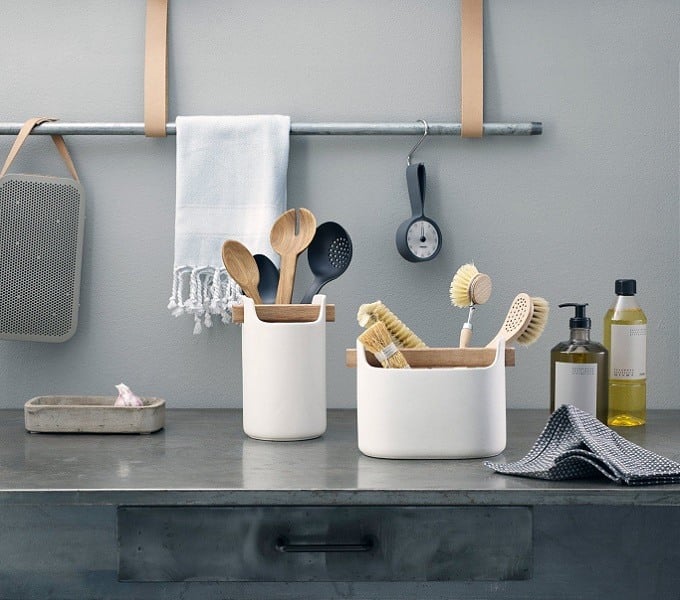


- Working Zone
This zone constitutes the work area in the kitchen, where the main countertop should be located, as well as easy access to all basic food products and kitchen tools necessary for daily meal preparation, among which we can certainly list:
- knives placed in knife blocks and strips;
- cutting boards;
- spoons, spatulas, and other kitchen tools;
- bowls and small bowls;
- kitchen scales;
- food processors, blender, mixer;
- frequently used food products, such as flour, sugar, spices, oil.


We will ensure excellent access to knives, spatulas and kitchen utensils or the most frequently used spices if we hang a rail with a system of shelves and hooks on the wall between the upper and lower cabinets. In terms of furniture in this zone, cabinets with drawers and internal divisions work best, which can be achieved if we place drawer organisers in them. Spice drawers, frequently used food items, and organisers and stands for kitchen tools are essential here. It is also worth ensuring workbench lighting under the wall cabinets and access to an electrical socket to easily plug in a mixer or blender.


- Cooking and Baking Zone
This is the zone where an oven, hob, microwave, and other appliances essential for cooking and baking cannot be missing. These include:
- pots,
- lids,
- frying pans,
- baking tins,
- heat-resistant dishes,
- roasting pans.
It's worth placing the oven and microwave in a tall built-in cabinet, while other appliances should go in cabinets and spacious drawers. In the cooking and baking zone, a corner is also often found, which should be properly utilised to make the best possible use of space. This is an ideal place for pots, pans, and other dishes. Convenient access to them is provided by shelves and larder unit systems, which, thanks to cleverly designed mechanisms, slide out completely, allowing even the most distant and hard-to-reach nooks and crannies in the cabinet to be used.
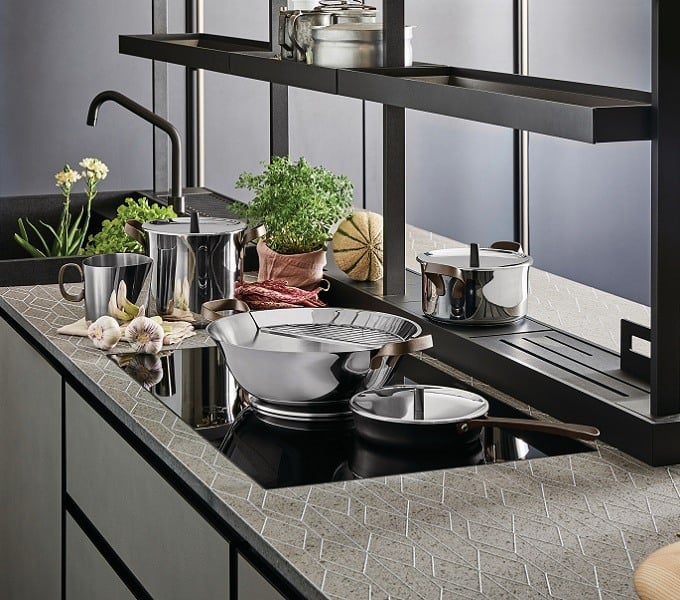


In an ergonomic kitchen, the zones should be arranged in the order listed above, i.e., from storage to cooking and baking, clockwise. In practice, this means that the first appliance from the entrance should be the refrigerator and pantry cabinet. Before groceries go there, however, they need to be placed on a 40 cm auxiliary worktop, which should be located right next to the refrigerator. Behind the refrigerator should be the sink. Next is the main worktop, which should be at least 60 cm wide and at least 120 cm long. Behind the worktop, we place the hob, and above it, the extractor hood. Finally, there should again be a small auxiliary worktop, at least 40 cm long, on which prepared dishes can be placed.
The Working Triangle in the Kitchen. Important Dimensions and Distances in the Kitchen
The working triangle is the golden rule of kitchen space design that guarantees functionality, regardless of the size, shape, or style of the interior. This rule involves the correct placement of the refrigerator, sink, and hob relative to each other and at an appropriate distance. According to this, these appliances should be at the vertices of a triangle. The correct distances in the working triangle are as follows:
- 120-210 cm – distance from the refrigerator to the sink;
- 120-210 cm – distance from the sink to the hob;
- 120-270 cm – distance from the hob to the refrigerator.
In addition to the working triangle, other important dimensions and distances in the kitchen, when properly planned and applied, will make the kitchen functional and ergonomic. One of these is the height of the kitchen worktop, which is standardly 85 cm. Although it is suggested that the best solution, guaranteeing comfort of work in the kitchen, is to adjust the height of the worktop to the height of the person using it. Thus, the height of the kitchen worktop should be 10-15 cm below our bent elbow.
As for kitchen furniture, base cabinets are best mounted at a height of 85 cm. The distance of wall cabinets from the worktop should be at least 50 cm. The extractor hood is recommended to be mounted at about 70 cm from a gas hob and 65 cm from an electric hob.



What Style to Choose for Your Kitchen? The Best Materials for the Kitchen
Now that you know how to design a kitchen to ultimately achieve a functional and ergonomic interior, it's high time to discover the trendiest kitchen arrangement styles and learn what materials to choose for furniture and worktops to ensure they captivate with their beauty and serve you for many years.
- Scandinavian Kitchen
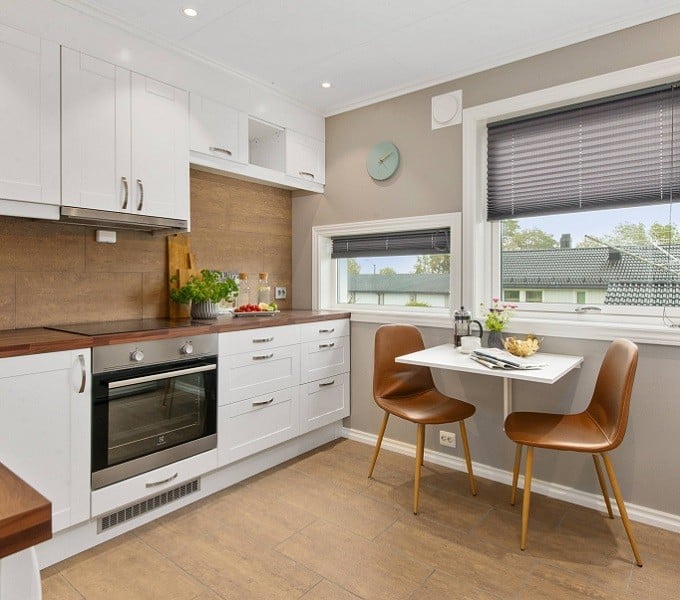
One of the most frequently chosen kitchen arrangement styles is Scandinavian, characterised by simplicity, functionality, and the use of natural materials. Characteristic of kitchens in this style are light, most often white, simple, wooden furniture devoid of ornamentation. The ideal complement is a wooden kitchen worktop or a highly tasteful and durable stone worktop. A Scandinavian-style kitchen is an elegant, simple, and comfortable interior where there is no room for extravagance or unnecessary items.



Find out!
- Black and White Modern Kitchen
A black and white kitchen is a modern, timeless, and incredibly elegant arrangement proposal. And while such a solution might seem simple, mundane, and boring – nothing could be further from the truth! White kitchen cabinets, glossy glass kitchen tiles placed between the cabinets, and a strong and expressive granite worktop are a real hit! Black kitchen worktops often speckled with glitter and finished to a high gloss combined with white cabinets and grey, silver, and gold accessories look incredibly tasteful and chic.


Note
- Industrial Kitchens
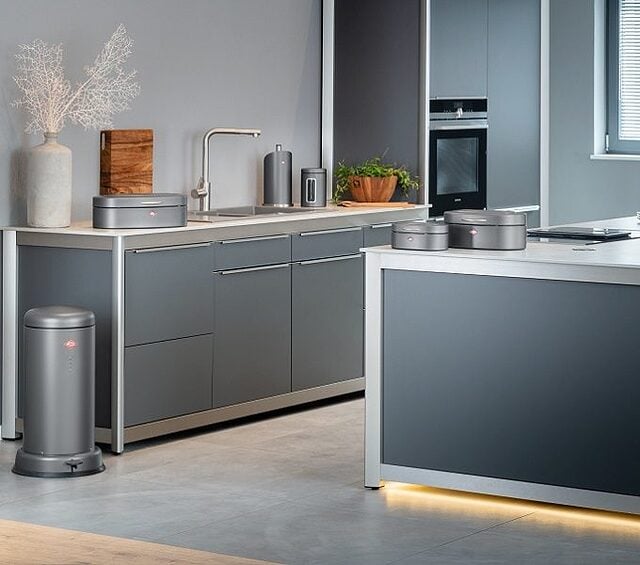
The industrial style in interior design is gaining an increasing number of adherents year by year. In industrial kitchens, raw and natural materials, such as concrete, brick, metal, but also wood with distinct grain, reign supreme. Glass for an industrial kitchen is also a frequently used material, most often placed between the lower and upper cabinets. As for furniture, low, simple cabinets made of light wood, combined with steel elements, fit this aesthetic best. Greys, beiges, browns, and black dominate in industrial kitchens.
- Idea for a Rustic Style Kitchen
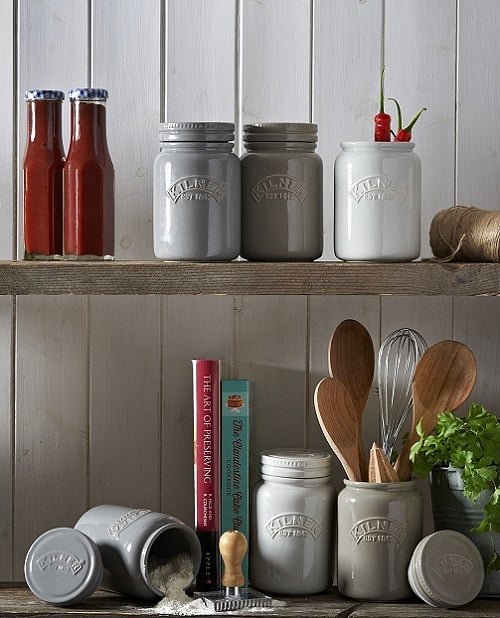
A rustic kitchen is a idyllic, cosy interior with a unique, exceptionally homely, family atmosphere. In this interior, natural materials rule. Wooden furniture finished with strips, cornices, or fittings, usually painted, distressed, or stained, adds warmth to this interior. As for the choice of worktop, in addition to wood, a marble or engineered stone worktop looks excellent in a rustic kitchen. Such a kitchen also cannot lack a large number of accessories and trinkets arranged on shelves.



- Provence Style Kitchen
Aromatic herbs, good wine, and picturesque landscapes are characteristic features of Provence, a region located in southeastern France, which captivates with green hills and purple lavender fields. All these elements can be seen in a Provencal kitchen, where wooden, light furniture with delicate, intricate decorations and subtle carvings reigns supreme. A stone worktop or one finished with tiles with a wooden edge suits this interior. Of course, the lavender motif cannot be missing here, for example, on a tablecloth or decorative accessories, as well as pots with herbs or lavender.
- English Style Kitchen
White, vanilla, celadon cabinets with lightly milled fronts, finished with massive mouldings are characteristic features of an English kitchen. The arrangement is complemented by wooden or stone worktops, as well as wicker and brass accessories and items styled to look antique.
Tip
Decorating a kitchen can be easy and enjoyable, especially when a huge range of kitchen promotions on useful appliances and accessories awaits you. Take a look at FormAdore Magazine: Kitchen – Your Recipe for Success, to find out more.
Whether it's a kitchen in a flat, an attic, or a spacious house, proper design and arrangement are crucial. We are convinced that thanks to our practical advice, everyone will be able to create a functional, yet beautiful and aesthetic interior, where daily meal preparation will bring much joy and pleasure.